
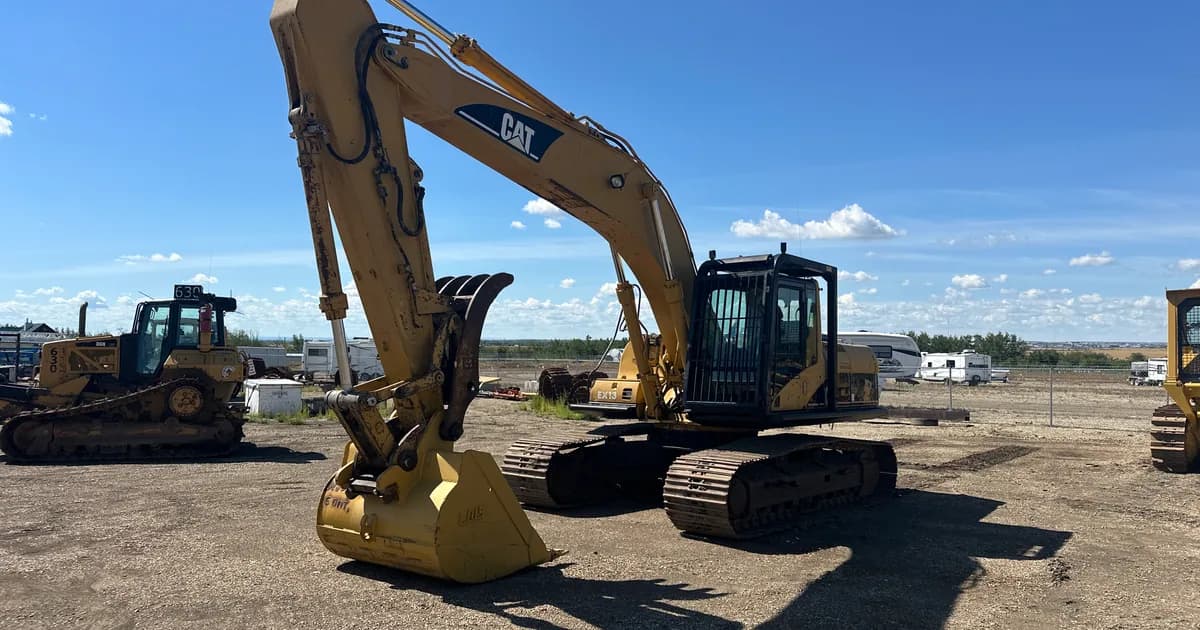
You are looking at a used Cat 320 with 7,800 hours. The price is right, it looks clean in the photos, and the seller says it has been well maintained. But that number — 7,800 hours — is sitting in your head. Is that a lot? Is the machine halfway through its life or near the end? Will a lender even finance it?
These are the right questions to ask, and the answers are more nuanced than most people realize. Hours on an excavator are not like mileage on a pickup truck. Two machines can both show 8,000 hours on the meter and be in completely different condition depending on what kind of work they did, how they were maintained, and what brand and model they are. This guide breaks down everything you need to know about excavator hours — what the numbers actually mean, how they affect the value of the machine, and how that flows through to your ability to finance it.
One thing to clear up first, because it trips up almost everyone: there is no magic hours number that makes a machine "unfinanceable." Canadian lenders do not post an hours cap the way they cap age. What they actually do is appraise the machine's value and cap its age at the end of your term. Hours matter because they drive that value and the machine's remaining useful life — which then shape your rate, term, and down payment. So "too many hours" is really "few enough hours left in the machine that the lender's collateral gets thin." Keep that framing in mind as we go.
What Hours Actually Measure
The hour meter on an excavator tracks the total time the engine has been running. It is the closest equivalent to an odometer on a vehicle, but it tells a less complete story. Here is why.
A truck with 200,000 km has driven 200,000 km regardless of whether it was highway driving or city driving. An excavator with 6,000 hours has had its engine running for 6,000 hours, but those hours could represent very different levels of wear depending on the application.
Demolition hours are the hardest on a machine. An excavator breaking concrete, pulling apart buildings, and handling rebar all day puts enormous stress on the boom, stick, bucket linkage, hydraulic cylinders, and swing bearing. A demolition machine with 6,000 hours has taken more abuse than a grading machine with 10,000 hours.
Grading and finish work hours are the gentlest. An excavator doing final grade on subdivisions operates at lower RPM, makes smoother movements, and does not experience the shock loads of demolition or rock digging. These hours are "easy hours."
General excavation falls in the middle. Digging footings, trenching for utilities, loading trucks — this is standard work that represents average wear.
Rock and hard digging accelerates wear. An excavator working in granite, limestone, or heavy clay with a ripper or a rock bucket ages faster than one working in sandy soil.
| Work Type | Wear Factor | 6,000 Hours Equivalent Wear |
|---|---|---|
| Finish grading | Light | ~4,000 "average" hours |
| General excavation | Average | ~6,000 "average" hours |
| Utility trenching | Average | ~6,000 "average" hours |
| Loading trucks (earth) | Average-Heavy | ~7,000 "average" hours |
| Heavy clay/rock digging | Heavy | ~8,000 "average" hours |
| Demolition | Very Heavy | ~9,000-10,000 "average" hours |
This is not an exact science — the equivalent-hours figures above are a practitioner rule of thumb, not a published standard, and no source puts a precise multiplier on demolition versus grading hours. What is documented is that the manufacturers treat work severity as real: Caterpillar engineers different undercarriage systems for high-abrasion versus high-impact applications like rock, forestry, and landfill work, because those conditions wear a machine at fundamentally different rates. The point holds even where the exact numbers don't: a 6,000-hour grading machine might have more useful life remaining than a 4,000-hour demolition machine.
Key takeaway: Always ask what the machine was used for, not just how many hours it has. A low-hour demolition excavator may be in worse shape than a higher-hour machine that has been doing general excavation.
Condition by Size Class
Different excavator sizes have different expected lifespans. A mini excavator's hydraulic components and undercarriage are lighter duty than a full-size machine, so wear shows up sooner.
A note before the tables: these are practitioner rules of thumb for condition and resale value, not lender policy. No Canadian lender publishes an hours cutoff. What lenders cap is the machine's age at the end of the term; hours feed into the appraised value and remaining life, which is what actually moves your rate, term, and down payment. Read the "effect on terms" columns as tendencies driven by value, not hard yes/no rules.
Mini Excavators (Under 10 Tons)
Machines like the Kubota KX080, Cat 308, Bobcat E35, John Deere 60G. Well-maintained minis from quality brands typically reach 7,000-10,000+ hours before major-component decisions come due, with the best-kept units stretching to 12,000-15,000.
| Hours | Condition Assessment | Effect on Value & Terms |
|---|---|---|
| 0-2,000 | Like new, just broken in | Top value — best rates and terms |
| 2,000-4,000 | Low hours, lots of life left | Strong value — standard terms |
| 4,000-6,000 | Mid-life, starting to show wear | Solid — standard terms |
| 6,000-8,000 | Higher hours, check undercarriage and hydraulics | Value softening — more down likely |
| 8,000-10,000 | Approaching major-component territory | Shorter term, larger down |
| Over 10,000 | Major components likely need attention | Thin resale value — toughest terms, often private lenders |
Mini excavators reach their practical limit sooner because components like swing bearings, final drives, and hydraulic pumps are smaller and not designed for the same total service life as their full-size counterparts.
Mid-Size Excavators (10-30 Tons)
Machines like the Cat 320, Cat 325, Komatsu PC210, John Deere 210G, Volvo EC220.
| Hours | Condition Assessment | Effect on Value & Terms |
|---|---|---|
| 0-3,000 | Barely used, premium condition | Top value — best available terms |
| 3,000-6,000 | Sweet spot for used buyers | Strong value — standard terms |
| 6,000-10,000 | Good working machine, check key components | Standard to slightly tighter terms |
| 10,000-14,000 | Past mid-life, maintenance history matters | Lower value — higher rate, more down |
| 14,000-18,000 | High hours, likely needs or has had major work | Often private lenders, shorter term |
| Over 18,000 | Very high, approaching economic limit | Thin resale — difficult to finance |
The Cat 320 is the benchmark machine in this class, with a deep resale market and wide parts availability — which is exactly why lenders are comfortable with it. Published lifespan figures for this class vary a lot by brand, work type, and upkeep, so treat any single "max hours" number with skepticism. A documented service history tells you far more than the meter reading alone. Komatsu PC200/210-series and John Deere 200-series machines have similar reputations for longevity.
Full-Size Excavators (30+ Tons)
Machines like the Cat 330, Cat 336, Cat 349, Komatsu PC360, Hitachi ZX350.
| Hours | Condition Assessment | Effect on Value & Terms |
|---|---|---|
| 0-4,000 | Low hours, premium condition | Top value |
| 4,000-8,000 | Good working condition | Strong — standard terms |
| 8,000-12,000 | Standard mid-life, check major components | Standard terms |
| 12,000-16,000 | Higher hours but these machines are built for it | Value reflects hours — slightly tighter |
| 16,000-22,000 | High hours, maintenance history is critical | Often private lenders, larger down |
| Over 22,000 | Very high, major rebuild likely done or needed | Thin resale — difficult to finance |
Full-size excavators are built heavier with beefier components, so they tolerate more hours. A Cat 349 with 14,000 hours is a different proposition than a Cat 308 with 14,000 hours — the big machine is designed for that kind of accumulation.
Hours vs. Age: Which Matters More?
This is one of the most common questions contractors ask, and the answer depends on who you are asking. For scale, a full-time excavator typically runs 1,000-2,000 hours a year, and US trade-press life-cycle data puts an average machine at roughly 14,500 hours by its tenth year — so a decade-old machine with far fewer hours either had an easy life or sat, while a much higher count means it was worked hard.
For the machine's mechanical condition, hours matter more than age. A 2017 excavator with 2,500 hours is mechanically in better shape than a 2021 excavator with 8,000 hours. The engine, hydraulics, undercarriage, and structural components wear based on use, not time.
For lender comfort, age is the explicit cap and hours feed the value. Lenders size the financing term to the machine's remaining useful life rather than posting a maximum-hours limit — as a general rule, banks and credit unions want the machine paid off by around 10-12 years old, and equipment finance companies stretch closer to 15. Hours then read as part of the appraised value rather than a separate published cutoff. Our used heavy equipment financing guide walks through how the age-at-end-of-term math works.
For value and pricing, hours have a bigger impact on the price than age alone. A 2019 Cat 320 with 3,000 hours is worth significantly more than a 2019 Cat 320 with 9,000 hours, even though they are the same age. The market prices machines primarily on hours, with age as a secondary factor.
Here is roughly how hours and age interact on a typical mid-size excavator. These figures are illustrative — see our used excavator pricing guide for current model-by-model values.
| Machine | Year | Hours | Market Value (approx.) | Financeable? |
|---|---|---|---|---|
| Cat 320 | 2022 | 2,500 | $220,000-250,000 | Yes, easily |
| Cat 320 | 2022 | 7,000 | $170,000-195,000 | Yes |
| Cat 320 | 2019 | 3,500 | $180,000-210,000 | Yes, easily |
| Cat 320 | 2019 | 9,000 | $130,000-155,000 | Yes, may need more down |
| Cat 320 | 2016 | 4,000 | $140,000-165,000 | Yes, shorter term likely |
| Cat 320 | 2016 | 12,000 | $90,000-110,000 | Harder, private lenders |
| Cat 320 | 2013 | 5,000 | $100,000-125,000 | Possible, age is the issue |
| Cat 320 | 2013 | 15,000 | $60,000-80,000 | Difficult |
Key takeaway: The ideal used excavator has moderate hours for its age. Low hours on a newer machine is great. Low hours on an older machine means it sat — which raises questions about why. High hours on a newer machine means it was worked hard, which is fine mechanically but means faster depreciation.
Red Flags in Hour Meters
Not every hour meter is telling the truth. Here is what to watch for.
Disconnected or replaced hour meters. If the hour meter shows 3,000 hours but the machine has a 2015 build date, that is suspicious. Either the machine was barely used (possible but unusual for a working excavator) or the meter was replaced or tampered with — replacing a meter resets it to zero. Check the hour reading against dealer service records if possible. On newer Cat machines, the hours are tracked electronically and can be verified through the dealer. Misrepresenting a machine's hours is illegal in Canada, but enforcement is thin and dealers say it is not all that rare — so verify the number rather than take the meter on faith.
Hours that do not match the machine's condition. A machine claiming 4,000 hours should have original paint in most areas, minimal track wear, tight pins and bushings, and a clean undercarriage. An experienced technician can tell whether the drives, engine exhaust, and overall performance match the stated hours. If the machine looks like it has been ridden hard and put away wet, the hours might not be accurate.
Multiple hour meters. Some machines have been through rebuilds or component replacements that included a new hour meter. Ask the seller if the meter has ever been replaced and what the hours were at the time of replacement.
Electronic vs. mechanical meters. Older excavators have mechanical hour meters that are easier to tamper with. Newer machines (2010+) have electronic meters that are harder to manipulate, though not impossible. If you are buying a pre-2010 machine, be extra cautious about hour claims.
How to verify hours:
- Request dealer service records (many brands track hours at each service visit)
- Pull the OEM telematics report — Komatsu Komtrax logs productive hours, idle time, and load factors; Caterpillar Product Status Reports (PSR) and Volvo MATRIS do the same. A Cat report even lists engine and transmission serial numbers, so you can catch component swaps or a reset meter
- Look at filter change intervals — a machine serviced every 500 hours with 12 recorded services has approximately 6,000 hours
- Get a pre-purchase inspection from a qualified mechanic who can assess whether the machine's wear is consistent with the claimed hours
What Lenders Think About Hours
Lenders are not mechanics, but they have rules built from data on equipment longevity, resale value, and default risk. Here is how hours factor into their lending decisions.
Hours affect the loan-to-value ratio. A machine with high hours is worth less on the resale market, which means the lender is lending a higher percentage of the machine's "liquidation value." This makes them uncomfortable because their collateral cushion is thinner. They compensate by requiring a larger down payment, charging a higher rate, or shortening the term.
Hours affect the maximum term. Lenders want confidence that the machine will outlast the loan. If a machine has 10,000 hours and the lender estimates it has limited remaining useful life, they will not offer a 6-year term. They might offer 3. This is why financing a high-hour machine often means higher monthly payments — the same principal compressed into fewer payments.
There is no published hours cutoff. This is the part contractors get wrong. Canadian lenders do not post a "max hours" the way you might expect. Instead, they size the loan term to the machine's remaining useful life and let high hours show up in the appraised value — a high-hour machine is worth less, so the same loan is a bigger share of its liquidation value. BDC is explicit about this: it publishes no equipment-age or hours maximum, offers terms of up to 12 years on new or used equipment, and aligns the repayment duration to the asset's lifespan. In practice, construction-equipment terms commonly run 48 to 84 months, with older or high-hour units capped shorter so the financing never outlasts the machine's productive life. As a working rule of thumb, banks and credit unions like to see a machine paid off by around 10-12 years old and equipment finance companies stretch closer to 15 — broker experience, not a posted policy. Within that window, hours move your rate, term, and down payment rather than producing a flat yes or no. Private lenders have more flexibility on both age and condition, which is why high-hour and older machines often end up financed by private lenders.
The combination of hours and age is the real factor. A 3-year-old machine with 8,000 hours is still very financeable because it is recent and has plenty of remaining life. A 10-year-old machine with the same 8,000 hours is harder because both the hours and the age are working against it.
For more on how machine age specifically affects financing, check out our guide on financing older equipment like a 2012 Cat 320.
How Hours Affect Pricing
Hours are one of the biggest variables in used excavator pricing — but not the only one. Make and model, age, configuration, and location all factor in, and one hour of use does not mean the same thing across machine types and classes. Read hours relative to comparable machines, not as a universal yardstick: 8,000 hours is "high" on a compact but ordinary on a 40-ton machine.
As a rough industry heuristic, a clean machine at 6,000-8,000 hours commonly sells around 20-40% below a comparable unit with under 2,000 hours, with the exact discount depending on brand, condition, and class. These are US trade-press estimates rather than Canadian auction data, so treat them as directional — but the direction is reliable: more hours, lower price. Our guide on average used excavator prices has more detailed pricing by model and year.
The pricing impact creates an interesting financing dynamic. A low-hour machine costs more, but it is easier to finance and gets better terms. A high-hour machine costs less, but it is harder to finance and the terms are worse. Sometimes the monthly payment ends up similar because the lower price on the high-hour machine is offset by the higher rate and shorter term.
Key takeaway: When comparing used excavators, do not just look at the purchase price. Factor in the financing terms that each machine's hours will command. A $140,000 machine at 9% over 5 years is a different proposition than a $100,000 machine at 14% over 3 years.
Practical Guidelines for Buyers
If you want the easiest financing: Look for machines under 6,000 hours from major brands. You will have your pick of lenders, get competitive rates, and have standard terms. This is the path of least resistance.
If you want the best value: Machines in the 6,000-10,000 hour range often represent the best value per hour of remaining life. They have depreciated past the steep early drop, they still have significant productive life ahead, and they are still financeable by most lenders (though terms may be slightly tighter). This is where experienced contractors shop.
If you are buying high hours (10,000+): Go in with your eyes open. Budget for upcoming repairs (undercarriage, hydraulic cylinders, swing bearing — these are the big-ticket items that come due in this range). Have a mechanic inspect the machine before you commit. Line up a private lender through a broker like IronFinance because bank financing is less likely on an older, high-hour machine. And make sure the purchase price is low enough that the machine makes financial sense even with higher financing costs and upcoming maintenance.
If hours seem too good to be true: A 2016 excavator with 1,500 hours raises questions. Why was it not used? Was it a rental that got parked? Was it in an accident? Was the meter replaced? Low hours on an older machine are not automatically a positive — investigate why.
The Bottom Line on Excavator Hours
There is no single number that is "too many hours" on an excavator, and there is no lender that quotes one. A Cat 320 with 12,000 hours of general excavation work and full maintenance records might be a better purchase — and an easier finance — than a no-name brand with 4,000 hours of demolition work and no records. Context matters.
That said, here are the practical guidelines:
- Under 6,000 hours: Sweet spot. Easy to buy, easy to finance, easy to resell.
- 6,000-10,000 hours: Good territory. Still plenty of life, still financeable, good value.
- 10,000-15,000 hours: Proceed with caution. Get an inspection, budget for repairs, expect tighter financing.
- Over 15,000 hours: For experienced buyers only. Know what you are getting into.
If you are shopping for a used excavator and want to understand how the hours on a specific machine will affect your financing options, talk to IronFinance. We work with lenders across the spectrum and can tell you quickly what terms are realistic for the machine you are looking at.
Sources: lender practice — BDC Equipment Loan (no published age or hours cap; terms up to 12 years aligned to the asset's useful life) and Mehmi Group (Canadian broker — typical construction-equipment terms of 48-84 months); work-type wear and undercarriage tiers — Ring Power / Caterpillar. Lifespan, rebuild-cost, and resale figures are directional US industry estimates, not Canadian auction data — Canadian costs typically run higher with import and labour, so verify a specific machine against a dealer service history or OEM telematics report and a pre-purchase inspection. Rate references reflect the prime rate of 4.45% as of June 2026.
For related reading, see our hours guides for the skid steer, dozer, skidder, wheel loader, motor grader, backhoe, and telehandler.
For more on related topics, check out our complete excavator financing guide and our guide to used excavator pricing in Canada.
Already own equipment, or eyeing a different machine?
Frequently Asked Questions
How many hours does an excavator last?
A well-maintained mini excavator from a quality brand typically reaches 7,000-10,000+ hours before major-component decisions (engine, hydraulic pump, undercarriage) come due, and the best-kept units run 12,000-15,000. Larger excavators are built heavier and generally last longer, but published lifespan numbers vary so widely by brand, work type, and maintenance that any single figure should be taken with a grain of salt. A documented service history tells you more than the meter alone.
Is 5,000 hours a lot on an excavator?
No, 5,000 hours is solidly in the mid-life range for most excavators. For context, a full-time contractor running a machine year-round typically puts on 1,000-2,000 hours per year. A machine with 5,000 hours has plenty of productive life left and is in the sweet spot for used equipment buyers — broken in but not worn out.
Is 2,000 hours a lot for a mini excavator?
No — 2,000 hours is early-life for a mini excavator, which typically reaches 7,000-10,000+ hours before major-component decisions. A machine this low is barely broken in, so the main things to check are maintenance records and any signs of hard rental use. It finances easily: low hours mean strong collateral value, so Canadian lenders offer their fuller terms and lower down payments.
Is 5,000 hours a lot for an excavator?
For a standard-size excavator, no — 5,000 hours is mid-life with plenty of productive years left; minis, which face major-component decisions around 7,000-10,000 hours, feel it a little sooner. Either way it finances well: Canadian lenders cap on the machine's age at the end of the term rather than on hours, so a clean 5,000-hour machine from a major brand structures a normal loan.
Do excavator hours affect financing approval?
Yes, but indirectly. Canadian lenders do not publish a hard hours cutoff — they cap on the machine's age at the end of the term and appraise its value. Hours drive that value and the machine's remaining useful life, which in turn affect your loan-to-value, rate, term length, and down payment. A high-hour machine is worth less as collateral, so lenders offset with more down or a shorter term rather than a flat decline. Hours are read alongside credit, age, brand, and maintenance history.