
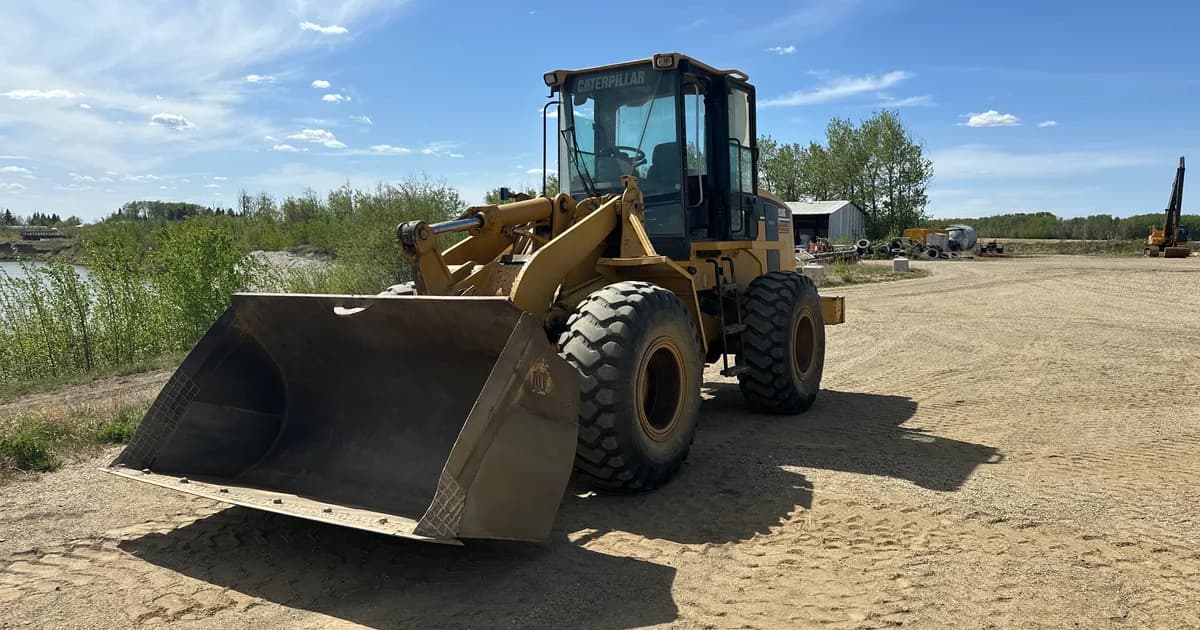
Here is the thing about a used machine that a brand-new buyer never has to think about, and that decides almost everything about how your financing goes: somebody already paid for the steepest depreciation. A construction machine loses the biggest slice of its value in the first few years, the same way a new truck does. By the time you are looking at a five- or eight-year-old unit, that cliff is behind it. You are buying the flatter, cheaper part of the curve — the productive years at a discount.
The catch is that the lender is looking at the exact same curve, and they are standing at the other end of it. When a lender finances a used machine, the only question that really matters to them is: if this borrower stops paying two years from now, can we repossess this and sell it for enough to cover what is still owed? They are not lending against what you paid. They are lending against what the machine fetches at auction on a bad day. Everything they ask for — the age, the hours, the brand, the maintenance file, the down payment — is them trying to pin down that one number.
Once you understand that the whole used-equipment financing conversation is really a negotiation about the resale floor, the rest of it stops feeling random. The deal that "should have worked" but got declined, the rate that came in higher than your buddy's, the extra ten percent down the lender wanted — almost all of it traces back to how confidently the lender can answer that auction-floor question. This guide walks through what they actually look at, where 2026 rates sit, what gets approved versus declined, and how to structure a used deal so it funds.
The two numbers every used deal lives between
A used-equipment deal sits between two numbers, and the gap between them is where your terms get set.
The first is the purchase price — what you are paying. The second is the resale floor — what a lender believes they could recover at auction if the deal went sideways. On a three-year-old Cat excavator with low hours, those two numbers are close together and both are easy to defend with years of comparable sales, so the lender feels safe and your terms are good. On a fifteen-year-old machine from a brand with thin resale data, the gap is wide and fuzzy, the lender is nervous, and they close that gap by asking you for more money down and a shorter term.
That is the entire logic. More resale certainty equals better terms. Less resale certainty equals more down payment, higher rate, shorter term — or a decline. When you look at a machine you want to buy, try to look at it the way the lender will: not "is this a good deal for me," but "how easily could someone prove what this is worth, and how fast could it sell." If the answer is "very easily and very fast," you are going to have a smooth financing experience.
What a lender is actually underwriting on a used machine
Five things move the resale-floor number more than anything else. Get these right and most used deals come together.
Brand and resale depth. Caterpillar, Komatsu, John Deere, Volvo, Bobcat — these brands have dealers who take machines on trade and auction houses with years of comparable sales behind them. A lender can value them in minutes and sell them in a week. A machine from a brand that is newer to the Canadian market, or one with a thin resale history, is harder to value and slower to move, and that uncertainty gets priced straight into your rate and down payment. In my experience this is the single most underrated factor — buyers fixate on price and credit, but the brand's resale depth is often what quietly decides how many lenders will even look at the file.
Age at the end of the term — not today. This is the one that kills more used deals than any other, and it catches people off guard. Lenders care about how old the machine will be when the loan is paid off, not the day you buy it. If a lender's collateral policy caps at 15 years and you want a five-year term, the machine cannot be older than 10 today. I have watched contractors find a great price on an older unit, line up a long term to keep the payment low, and then discover the math simply does not exist with any lender — the term they need would leave the lender holding 18-year-old collateral. Always run the age-at-payoff number before you fall in love with a machine.
Hours or mileage versus what's expected. Hours are the wear gauge for construction iron; mileage does the same job for trucks. Lenders compare the meter to what is normal for the age — very roughly 800 to 1,200 hours a year, depending on the machine. A seven-year-old excavator with 4,500 hours has been used lightly and reads well. The same machine with 11,000 hours has been worked hard, which means more wear and less remaining life, and the terms tighten accordingly. For category-specific thresholds, see our guides on excavator hours, dozer hours, and skid steer hours.
Condition and a real maintenance file. A used dozer with a complete dealer service history — oil samples, undercarriage inspections, component changes documented — is worth measurably more to a lender than the identical machine with no paperwork. The records tell them the machine was cared for and that the hours on the meter are real. If the seller has telematics (Komtrax, Cat Product Link, JDLink), that is verified operating history a lender can trust instead of taking your word for it.
Where you are buying it. A dealer purchase is easier to finance than a private sale, full stop. Dealers issue clean invoices, clear liens, often offer inspections, and have a reputation to protect. A private sale shifts that verification burden onto the lender — lien searches, an independent inspection, confirming the seller actually owns the machine free and clear — so some lenders add steps or a bit of time on private-party deals. It is still very financeable; it just has more moving parts — our guide to financing a private-sale machine walks that path end to end.
Where used-equipment rates sit in 2026
Rates start with the macro picture and adjust from there. As of June 2026 the Bank of Canada has held its policy (overnight) rate at 2.25% — the fifth hold in a row, steady since late 2025 — and the big banks' prime rate sits at 4.45%. Equipment financing prices off that prime, so the ranges below float with it; the next Bank of Canada decision is mid-July 2026, and if prime moves, these move with it.
Your credit tier sets the starting band. The equipment age then shifts you within it. The table below reflects directional ranges I see across lenders as of mid-2026 — it is not a published rate sheet, and it is not a quote. Your actual rate depends on the full file: lender type, down payment, brand, hours, and business history.
| Credit Tier | Score Range | Under 7 Years Old | 7–12 Years Old | 12+ Years Old |
|---|---|---|---|---|
| Excellent | 750+ | 7–9% | 8.5–11% | 11–14% (where available) |
| Good | 680–749 | 8.5–11% | 10–13% | 12–16% |
| Fair | 620–679 | 11–14% | 13–16% | 15–18% |
| Challenged | 550–619 | 14–18% | 16–19% | Private-lender territory |
| Rebuilding | Below 550 | 17–22%+ | 18–22%+ | Very limited |
A few things the grid cannot show you:
- These assume a standard machine from a brand with real resale data. Niche equipment, thin-resale brands, or heavily modified rigs push you toward the top of each range.
- The rate is only part of the cost. A shorter term at a slightly higher rate often costs less total interest than a long term at a lower rate. Compare total cost of borrowing, not the monthly payment — our rate comparison guide walks through that math.
- Captive finance arms sometimes beat these ranges on certified used machines (more on that below). Always ask the dealer what their finance company is running.
Age and hours: where the lenders draw their lines
The intersection of age and hours decides how many lenders will compete for your deal and what they will offer. The patterns below hold across most equipment types, though every lender's policy is its own.
| Equipment Age | Hours (Construction) / km (Trucks) | Who Will Lend | Typical Down | Typical Max Term |
|---|---|---|---|---|
| 0–5 years | Under 4,000 hrs / under 200K km | Everyone competes | 0–10% | 60–72 months |
| 0–5 years | 4,000–8,000 hrs / 200–400K km | Most lenders | 10–15% | 60 months |
| 6–10 years | Under 6,000 hrs / under 400K km | Most lenders | 10–15% | 48–60 months |
| 6–10 years | 6,000–10,000 hrs / 400–700K km | Banks cautious, finance cos. willing | 15–20% | 48 months |
| 11–15 years | Under 8,000 hrs / under 600K km | Finance cos. and private | 15–25% | 36–48 months |
| 11–15 years | 8,000–12,000 hrs / 600K+ km | Mainly private | 20–30% | 36 months |
| 16–20 years | Any | Specialist private only | 25–35% | 24–36 months |
| 20+ years | Any | Very limited | 30%+ or cash | 24 months |
The sweet spot — the most lender competition, the best rates, the most flexible terms — is a machine roughly three to eight years old with moderate hours from a brand with strong resale. That is where the depreciation cliff is already behind the machine but plenty of working life is still ahead, and where the most lenders are fighting for the deal. If you have any flexibility on what to buy, buy into that band.
Key takeaway: Age at payoff is the number that matters, not age at purchase. A 10-year-old machine on a 5-year loan leaves the lender holding 15-year-old collateral at the end. Run that number before you apply, not after.
The 2026 used market, honestly
It helps to know what the broader market is doing, because it shapes both what you will pay and how the lender feels about resale values. The short version: the used market has normalized down off the 2021–2023 frenzy, but it has not crashed, and it is not booming either. At the auction level, RB Global (Ritchie Bros.) reported its construction and transportation transaction value down about 6% through the first nine months of 2025, with fewer lots actually crossing the block — volumes were down even where total dollars held up on richer machine mix. So if you are hoping for either a fire-sale collapse in used prices or a fresh spike, neither is showing up in the data. Plan your purchase on the machine in front of you and the rate you can actually get, not on a market timing bet.
Why a bank says no and a finance company says yes
This is the most frustrating thing contractors run into: you apply at a bank, wait three weeks, get declined — and then a finance company approves the same deal in two days. It is not random, and once you see the mechanics you stop wasting time at the wrong door.
A bank underwrites to fixed policy. A bank's credit team works inside hard guidelines — maximum age, minimum score, required documents, eligible categories. The person reviewing your file usually cannot override them. Miss the box on any single line and the file is declined, no matter how strong everything else is. A 12-year-old private-sale excavator and a 610 score will trip the policy before a human ever weighs the merits.
A finance company underwrites the whole deal. A private or equipment finance lender reads the complete picture — credit, yes, but also the machine's resale value, your revenue, your down payment, your time in the industry. A contractor with a 610 score, strong monthly deposits, 20% down, and a well-kept Komatsu PC210 is a deal that makes sense. The bank's system stops at the score. The finance company reads the deposits and sees a borrower who can clearly carry the payment.
Speed is part of what you are buying. Banks commonly take one to three weeks on equipment files; finance companies often approve in one to three business days. When a machine you need is sitting on a lot and a contract starts next week, that speed is worth real money — the profit from starting on time usually dwarfs a couple of points of rate.
Key takeaway: A bank decline rarely means the deal is bad. It usually means the deal does not fit that bank's box. A broker who works across lender types places the same file with a lender whose policy actually fits it.
What sails through, what stalls, and what dies
Not all used deals are equal. Here is a realistic picture, using real asking prices pulled from our equipment listings (sourced from Canadian dealer inventory, June 2026) so the numbers are current rather than illustrative.
Sails through
A late-model Cat 320 from a dealer, low hours, decent credit, 10% down. Strong brand, deep resale data, dealer paper — every lender wants it. Current dealer asking prices on Cat 320-class excavators in our listings run from around the high-$60,000s for older units up to roughly $250,000 for a 2022, so this is a well-understood, easy-to-value machine at every age.
A used Bobcat T-series compact track loader, 15% down, fair credit. The lower score nudges the rate up, but CTLs from Bobcat have deep resale data and the dollar amount is modest. We currently see used Bobcat T-series machines listed from about $32,000 for an older T650 to roughly $127,000 for a near-new T86 — easy for a finance company to place.
A Kenworth highway truck, owner-operator with strong deposits. Trucks are a lender's comfort zone — huge market, well-established values, mileage instead of hours. Consistent bank statements carry a middling score here. Used Kenworths in our listings span a wide range, from under $30,000 for a high-mileage older tractor to nearly $500,000 for a specialized late-model unit, so there is a financeable truck at almost every budget.
Stalls — needs the right lender
An 11-year-old Komatsu PC210 with high hours, 620 credit. The brand is excellent and the resale data is deep, but age and hours together put this outside most bank boxes. It needs a finance company, probably 20% down and a 48-month term. Very doable — just not at a bank. For reference, our listings currently show PC210s from around $69,000 for a high-hour 2013 up to $275,000 for a near-new low-hour unit, which is exactly the age-and-hours spread that drives both price and financeability.
A Tigercat feller buncher. Forestry iron has a thinner resale market than general construction gear, so a generalist lender may pass simply because they cannot confidently value it. A lender who understands forestry — and knows what a Tigercat is worth — will do the deal. Used Tigercat machines in our listings run from under $30,000 for an old skidder to nearly $1,000,000 for a current-year unit, so brand-aware lender matching matters more here than almost anywhere.
An older Cat D6 from a private seller with no service records. Strong brand and resale demand, but the missing maintenance file and private-sale sourcing mean the lender has to work harder to verify value and condition. Expect a required inspection and more money down. Used D6 dozers in our current listings run from about $275,000 for a higher-hour 2020 up to $750,000 for a low-hour current-generation machine — real money, which is exactly why the lender wants the records.
Dies
A 16-year-old machine with 14,000 hours, thin-resale brand, private seller, 560 credit, 10% down. Every factor pulls the wrong way at once — old, hard-used, hard to value, hard to resell, weak credit, minimal skin in the game. Even private lenders generally pass on the full stack.
Anything with a lien the seller will not clear. No lender funds a purchase where the existing security interest cannot be discharged. Always run a lien search before you commit a dollar (more on that below).
Heavily modified or one-off equipment with no comparable sales. A machine permanently converted for a niche job — custom long-reach boom, specialized demolition setup — is hard to appraise and hard to resell. Many lenders will value it at the base-machine price and ignore the modifications entirely, which can blow up your loan-to-value.
New vs. used: the real trade-off
It is worth being clear-eyed about what you give up on financing terms when you buy used — and why it is almost always still the better deal.
| Factor | New | Used (under 7 yrs) | Used (7–12 yrs) | Used (12+ yrs) |
|---|---|---|---|---|
| Rate premium | Baseline | +0.5–2% | +1.5–4% | +3–6% or declined |
| Typical down | 0–10% | 10–15% | 15–20% | 20–30%+ |
| Max term | 60–84 months | 60–72 months | 48–60 months | 36–48 months |
| Lenders available | All | All | Most | Mainly private |
| Promo rates | Yes (captive) | Sometimes (CPO) | Rarely | No |
Yes, used iron costs a bit more to finance per dollar borrowed. But the purchase price is so much lower that the total cost of ownership almost always lands well below new — because the depreciation cliff already happened on someone else's books. To put real numbers on it from our current listings: a low-hour current-generation Cat D6 is asking around $750,000, while a four-year-old D6 with moderate hours sits near $475,000. That is roughly $275,000 less for a machine that has plenty of productive life left — a gap no rate premium comes close to erasing.
Key takeaway: Used equipment costs more to finance and less to own. You are buying the productive years after someone else has already paid for the depreciation.
How lenders read each equipment type
Different categories carry different resale risk, which is why the same credit file can sail through on one machine and stall on another.
Excavators. Among the most financeable used categories — deep resale data across every size class. Cat 320-series and Komatsu PC-series machines have years of comparable sales, so lenders value them with confidence. See our used excavator financing guide for model-level detail.
Dozers. Strong financeability on the major brands, but undercarriage condition is the make-or-break inspection point — a worn-out undercarriage on a mid-size dozer can run well into the tens of thousands of dollars to rebuild, so lenders want the undercarriage percentage remaining before they finalize value. Our dozer financing guide digs into this.
Skid steers and CTLs. High demand and strong resale, but the lower dollar amounts mean some lenders set minimum financing thresholds (often $25,000–$50,000). Bobcat, Cat, John Deere, and Kubota have the deepest resale data here. See our skid steer financing guide.
Trucks. Valued on mileage rather than hours, and lenders are comfortable because the market is enormous and values are well-established. Kenworth, Peterbilt, Freightliner, and Western Star have the strongest resale. Log trucks are a slightly thinner market but still finance well with the right lender — see our log truck financing guide.
Logging and forestry. Tigercat, John Deere, Cat, and Ponsse are the recognized names. The resale market is smaller than construction, so fewer lenders specialize in it and brand-aware lender matching matters most. Our logging equipment financing guide covers what to expect.
Cranes. Specialized appraisal, and certification and inspection history matter more than on almost any other category — the lender needs current certifications and a clean inspection record. Liebherr, Tadano, Link-Belt, and Grove have the most established resale markets.
Agricultural equipment. Tractors, combines, and implements finance well through both standard equipment lenders and farm-specific programs — see the next section for Farm Credit Canada and the CSBFP, both of which apply to used machines. John Deere, Case IH, and New Holland have the deepest resale data in ag.
Government-backed and captive programs worth asking about
Most used deals get funded by banks, equipment finance companies, or private lenders. But two government-backed programs and the manufacturer captives are worth knowing, because used equipment is explicitly eligible and the terms can beat the open market.
The Canada Small Business Financing Program (CSBFP) is the one most buyers overlook. It is a federal loan-loss-sharing program delivered through the banks and credit unions, and used equipment is eligible — not just new. The total program ceiling is $1.15 million per borrower ($1 million of term loans plus $150,000 of line of credit), but read the fine print that actually binds on equipment: within the term-loan limit, no more than $500,000 can go toward equipment and leasehold improvements combined. So for most single-machine purchases the practical cap is that $500,000, not the headline $1.15 million. If your machine fits under it and your bank participates, it is often the cheapest money available for a small or newer business.
Farm Credit Canada (FCC) finances new or used farm equipment with a tiered down-payment structure — zero down on loans under $100,000, 10% under $500,000 through their dealer program, and a competitive amount above that — with terms up to 10 years. One caveat for used buyers: that 10-year maximum generally applies to new machines; FCC matches the term to remaining useful life, so a used unit will typically come in shorter. Still, for ag iron, FCC is often the most flexible option on the table. If the purchase is a farm machine rather than construction iron, start with our farm equipment financing guide — it covers FCC alongside the CALA loan guarantee, and why the monthly-revenue question on most application forms misreads a seasonal operation.
Manufacturer captive finance — Cat Financial (through Finning in Canada), John Deere Financial (through Brandt), Kubota Credit, Volvo Financial, and Komatsu Financial — generally finance used and certified-pre-owned machines, not just new. Komatsu Financial, for example, advertises used and Komatsu-certified-used programs that can include options like deferred first payments or subsidized below-market rates on approved credit. Captives also run periodic promotions on certified or dealer-rebuilt machines — I have seen things like zero-percent-for-36-months on certified rebuilds surface from time to time — but these are time-bound, credit-qualified, and vary by dealer and country, so treat them as "ask the dealer what is running right now," not as a standing entitlement. When you are buying from a brand dealer, always ask what their captive finance arm is offering on that specific used unit; sometimes it beats anything an outside lender will do.
How to get the best terms on a used machine
These are the practical moves that actually change your approval odds and your rate.
Get a pre-purchase inspection. On any used machine of real value, spend the few hundred dollars for an independent mechanic or dealer inspection. It does two jobs at once: it protects you from buying a lemon, and it gives the lender confidence in the collateral. Some lenders require an inspection on older or private-sale machines anyway — having one in hand removes a delay.
Get the serial number early. Every used deal starts with a serial number (or VIN on a truck). The lender uses it to confirm factory specs, run lien searches, check for theft or total-loss history, and value the machine against comparable sales. Pull it from the seller before you start the financing process. If a seller will not give you a serial number, walk away — that alone is a red flag. The same serial number is what you search when you want to raise cash against a machine you already own; our guide to the equipment sale-leaseback covers that side.
Buy into the sweet spot. If you have flexibility, aim for the three-to-eight-year-old band with moderate hours from a strong-resale brand. You get a machine past the depreciation cliff with years of life left, in the exact range where the most lenders compete — and competition is what gets you a better rate.
Put more down on older iron. On a machine in the 10-to-15-year range, a bigger down payment changes the lender's whole risk picture. Moving from 15% to 25% down on a 12-year-old dozer can be the difference between a decline and an approval, and can pull the rate down two or three points on its own.
Use a broker for anything non-standard. Older equipment, challenged credit, a private seller, forestry or specialty iron, or any combination — that is exactly when broker access pays off, because we know which lenders actually fund those niches. A file a bank declines can be approved elsewhere in 48 hours when it lands on the right desk. That is most of what we do at IronFinance.
Submit a complete file the first time. Business financials, six months of bank statements, the seller's quote with full machine details, the serial number, photos, and any inspection or maintenance records — all at once. A complete file moves faster and signals to the lender that you are organized and the deal is real.
The mistakes that kill used-equipment deals
These are the self-inflicted ones I see most.
Applying at the wrong lender. Walking a 12-year-old private-sale machine and a 610 score into a bank burns three weeks and a hard credit pull for a deal that was never going to clear bank policy. Match the deal to the lender type, or use a broker who does that matching for you.
Skipping the lien search. A personal-property lien search is cheap and fast — in BC, for example, a self-serve Personal Property Registry search runs roughly $7 to $15 depending on how you run it (third-party services charge more), and every province has its own registry. Skipping it can mean buying a machine another lender already has a legal claim on. Your lender will catch it during due diligence and the deal will die — but you may have already put down a deposit.
Chasing the monthly payment instead of the total cost. A longer term lowers the payment and raises the total interest. On $100,000, a 60-month term at 10% costs roughly $27,500 in interest; stretch it to 72 months and you pay closer to $33,000. That extra ~$5,500 bought a lower payment and cost you real money. Compare total cost of borrowing across offers — our payment calculator lets you model it.
Skipping the inspection to save a few hundred dollars. An inspection that catches a cracked frame or a failing hydraulic pump just saved you from a six-figure mistake. On a major machine it is the cheapest insurance you will ever buy.
Sitting too long on a good machine. Iron in the sweet spot — three to eight years old, moderate hours, recognized brand, fair price — does not sit on the market. Get your financing pre-arranged so you can move when the right one appears. Our financeability checker gives you a quick read on where you stand.
Sources: Bank of Canada policy rate — Bank of Canada press release, June 10 2026; rate environment — Bank of Canada; CSBFP terms and used-equipment eligibility — Innovation, Science and Economic Development Canada; equipment financing terms — Farm Credit Canada and Komatsu Financial; used-market trends — RB Global / Ritchie Bros. via Equipment World; lien-search fees — BC Registries Personal Property Registry. Equipment asking prices from IronFinance equipment listings, sourced from Canadian dealer inventory, June 2026. Rate, down-payment, and term ranges reflect general market conditions as of June 2026 and float with the prime rate — they are directional, not quotes or guarantees. Your actual terms depend on your credit, the equipment, and the lender.
Sources: Bank of Canada; RB Global (Ritchie Bros.) reported — Equipment World; Farm Credit Canada; Used equipment is eligible — Innovation, Science and Economic Development Canada; Komatsu; Personal Property Registry search — Province of British Columbia; Bank of Canada. Rate, term, down-payment and approval-timing figures are directional practitioner conventions current as of August 2026 — they move with the prime rate, vary by lender and by machine, and are not quotes or approvals. Equipment prices are asking prices rather than transaction prices. Tax treatment depends on your own contract and circumstances; confirm with your accountant.
Get your used machine financed
Whether it is a $40,000 Bobcat track loader or a $750,000 dozer, used-equipment financing in Canada is straightforward once you understand that the lender is really underwriting the resale floor — and once you match the right lender to your specific combination of credit, machine, and deal structure. (Wondering about the lease route instead? On late-model used iron it can work — used heavy equipment leasing covers where it does and where it quietly becomes a loan.)
If you have found a used machine and want to know what financing actually looks like, apply through IronFinance. Tell us the brand, model, year, hours, and price, and tell us about your situation. We will come back with real terms from lenders who fund used deals every day. Use our financeability checker for a quick read, our payment calculator to model scenarios, or our equipment value tool to confirm you are paying a fair price. No pressure, no obligation — just the numbers you need to make a smart call.
Already own equipment, or eyeing a different machine?
Frequently Asked Questions
Can you finance used heavy equipment in Canada?
Yes. Canadian lenders finance used excavators, dozers, skid steers, loaders, trucks, logging equipment, and more every day. Mainstream banks and equipment finance companies are generally comfortable with machines up to 10–15 years old from brands with established resale markets. Specialized and private lenders can sometimes go further on age, though the down payment climbs and the term shortens as the machine gets older.
What interest rate should I expect on used equipment financing in 2026?
It depends on your credit, the equipment age, and the lender type. With the Bank of Canada policy rate held at 2.25% and bank prime at 4.45% as of June 2026, strong-credit buyers (680+) on equipment under seven years old typically see rates in the 7–10% range. Fair credit (620–679) on the same machine often runs 10–14%. Challenged credit or older equipment pushes higher, into the mid-teens and up. These are directional market ranges that move with prime — not quoted rates.
How old can equipment be and still get financed?
What matters is the machine's age at the END of the term, not the day you buy it. Banks and credit unions are usually comfortable when the equipment stays inside their collateral policy at payoff — often 10–12 years. Equipment finance companies stretch to around 15. Private lenders sometimes consider machines up to 20 years old if the hours are reasonable, the brand has a resale market, and the down payment is healthy.
Do I need a bigger down payment for used equipment?
Usually, yes. New equipment can sometimes be financed with 0–10% down. Used machines under seven years old typically need 10–15%, and equipment over ten years old commonly needs 15–25% or more. The older and higher-hour the machine, the more skin the lender wants you to have in the deal — because they are lending against the back half of its working life, not the front.
Which brands are easiest to finance used?
Brands with deep resale markets and years of auction and dealer data — Caterpillar, Komatsu, John Deere, Volvo, Bobcat — are the easiest for a lender to value and, if it ever came to it, resell. That is the whole game on used iron: the lender is underwriting what the machine is worth at auction, not what you paid. Brands with thin resale history in Canada usually mean more down payment or fewer lender options.