
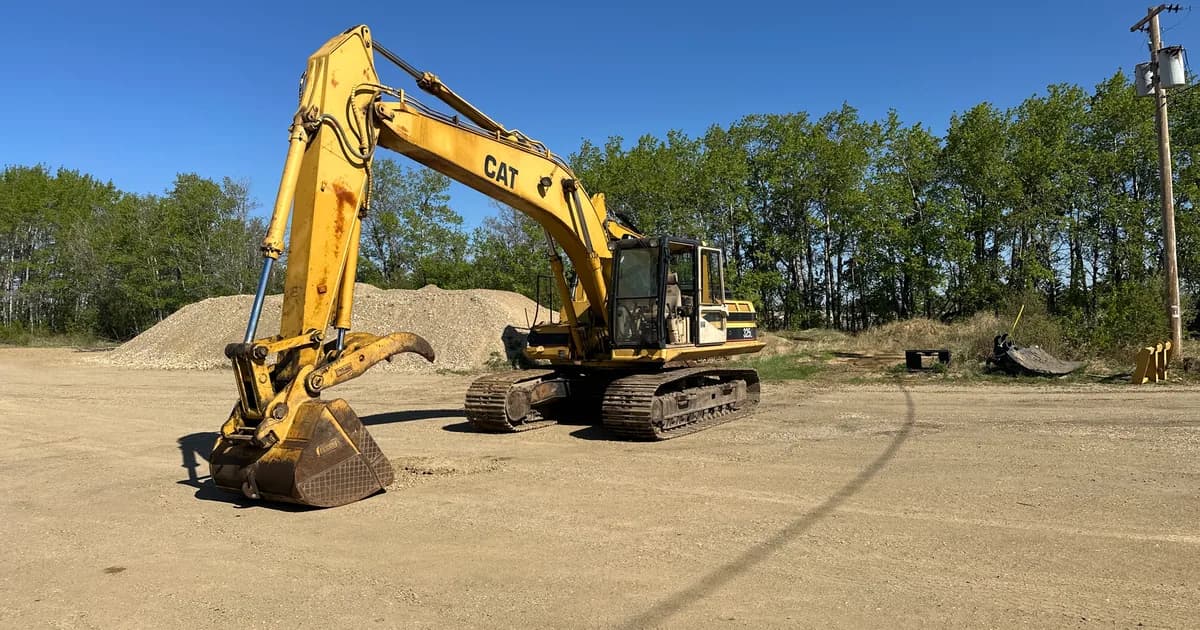
You found a used Cat 320 with 4,500 hours listed for $165,000. Or maybe it is a Komatsu PC210 at a dealer with fresh paint and new tracks for $138,000. Maybe it is a Kubota KX080 mini excavator that a guy two towns over wants $58,000 for, and you know it would open up residential work that has been passing you by. Whatever the machine, you know it can make you money. The question bouncing around your head is whether a lender will actually finance a used excavator — and if so, what is the catch?
The short answer is yes. Lenders finance used excavators in Canada every single day. It is one of the most common equipment financing transactions out there. But there are specific things lenders evaluate, and the details of the machine matter more than most contractors realize. Knowing what lenders look for before you apply saves you from wasting time on deals that were never going to get funded, and it helps you negotiate a better price when you understand exactly what makes a machine financeable versus problematic.
One thing to anchor before the details: equipment rates float off the prime rate, which sits at 4.45% as of June 2026 after the Bank of Canada held its policy rate at 2.25% for the fifth straight time. On a used excavator, expect roughly high single digits for excellent credit, climbing into the mid-to-high teens — and low 20s — for challenged credit or older iron. Treat every rate range below as directional, not a quote.
This guide covers the rest: what lenders evaluate on a used excavator, the age and hours thresholds that matter, which brands hold their value and which do not, what kills a deal before it starts, and how to structure your application for the best possible outcome.
What Lenders Evaluate on a Used Excavator
When a lender looks at a used excavator deal, they are trying to answer one core question: if you stop making payments, can they repossess this machine and sell it for enough to cover the remaining loan balance? Everything they evaluate ties back to that question.
Brand and model. This matters more than most contractors think, and it matters a lot. A Cat 320, a Komatsu PC200 or PC210, a Volvo EC220, a John Deere 350G, a Hitachi ZX210, or a Kobelco SK210 — these are all machines with established resale markets. Parts are available. Dealers will take them on trade. Auction houses know exactly what they are worth. A lender can look up the serial number, check the model's historical resale values, and feel confident they can recover their money.
Compare that to a lesser-known brand or a machine that was only sold in small numbers in the Canadian market. If the lender cannot easily find comparable sales data or identify dealers who would take the machine on trade, they view the collateral as risky. That does not mean they will not finance it — but it means they will want more down payment and charge a higher rate to compensate.
Hours. This is the mileage equivalent for an excavator, and lenders pay close attention. Hours tell the lender how much useful life remains in the machine and directly affect its resale value.
Age. Most lenders have a policy that the machine cannot be older than a certain age at the end of the financing term. If a lender caps at 15 years and you want a five-year term, the excavator needs to be no older than 10 years at the time of purchase. This is one of the most common reasons deals fall apart — the contractor finds a great price on an older machine but the math does not work with the lender's age policy.
Condition and maintenance records. A used excavator with a complete maintenance file showing regular oil changes, filter replacements, hydraulic service, and track replacements is worth measurably more to a lender than an identical machine with no records. If the seller has maintenance logs, get copies of everything. If the machine was dealer-serviced, those records can usually be pulled by serial number. A Komatsu with Komtrax telematics data showing service history is gold for a lender.
Undercarriage condition. On a tracked excavator, the undercarriage is one of the most expensive components to replace. A full undercarriage rebuild on a mid-size machine like a Cat 320 can run well into the tens of thousands. Lenders and appraisers look at track pad condition, roller and idler wear, and sprocket condition. A machine with 5,000 hours but a worn-out undercarriage is a red flag because it tells the lender either the hours are not accurate or the machine was worked extremely hard.
Age and Hours Thresholds
Here is how lenders generally view the intersection of age and hours on used excavators.
| Hours | Age 0-5 Years | Age 6-10 Years | Age 11-15 Years | Age 16+ Years |
|---|---|---|---|---|
| Under 4,000 | Finances like new. Best rates. | Easy approval. Standard rates. | Financeable with good credit. | Limited lenders. Higher down. |
| 4,000-8,000 | Easy. Standard terms. | Sweet spot for used deals. | Requires stronger application. | Difficult. Specialist lenders only. |
| 8,000-12,000 | Still good. Normal terms. | Higher down or shorter term. | Private lenders only. 20%+ down. | Very difficult to finance. |
| Over 12,000 | Unusual — may flag concerns. | Private lenders. Short terms. | Extremely limited options. | Essentially unfinanceable. |
The sweet spot that gets the easiest approvals and the best rates is a machine that is 3-8 years old with 2,000-6,000 hours. That is where you find the most lender competition and the most flexibility on terms.
One nuance trips up a lot of buyers: lenders care about the machine's age at the end of the term, not the day you buy it. A bank or credit union generally wants the excavator paid off by about 10-12 years old; equipment finance companies often stretch to 15; and private lenders will sometimes go to 20 on a strong brand with reasonable hours and a healthy down payment. So if a lender caps at 15 years and you want a five-year term, the machine can be no older than 10 today.
Key takeaway: The ideal used excavator for financing is 3-8 years old with under 6,000 hours from a major brand. Outside that window, deals are still possible but require stronger applications, larger down payments, or specialist lenders.
Brands That Hold Value vs. Brands That Do Not
Not all excavator brands are created equal in a lender's eyes. Resale value retention directly affects how willing a lender is to finance a machine and what terms they offer.
Tier 1 — Strongest resale, easiest to finance: Caterpillar, Komatsu, John Deere, Volvo. These four brands dominate the North American used equipment market. A used Cat 320 holds its value remarkably well, and dealers actively seek these machines for trade-in inventory, so auction prices are predictable. Lenders love them. See our used excavator pricing guide for current market values by model.
Tier 2 — Strong resale, straightforward to finance: Hitachi, Kobelco, Kubota (compact), Takeuchi (compact). These brands have loyal followings and established dealer networks. Resale values are solid, though typically a notch below the Tier 1 equivalents. Lenders finance these without issue, though you might see slightly less flexibility on age or hours.
Tier 3 — Moderate resale, may require stronger application: Doosan, Hyundai, Case, Link-Belt. These are good machines, but their resale values are lower and the used market is thinner. A lender financing a used Doosan DX225 might want an extra few percent down compared to a Cat 320 of the same age and hours. Not a dealbreaker, just a factor.
Tier 4 — Lower resale, harder to finance: Sany, XCMG, LiuGong, and other Chinese-manufactured brands that are newer to the North American market. Parts availability, dealer support, and resale demand are all less established. Some lenders will not finance these at all. Those that will require higher down payments and offer shorter terms.
What Kills a Used Excavator Deal
Understanding what blows up a deal before it starts saves you time and frustration. Here are the most common deal-killers.
Outstanding liens. If the seller still owes money on the machine, there is a security interest registered against it under the provincial Personal Property Security Act (PPSA) — the law that governs liens on equipment, vehicles, and other personal property in every province except Quebec (which uses its Civil Code). This matters because a registered lien follows the asset, not the person: if the previous owner defaults, the secured lender can repossess the machine even after you have bought and paid for it. Your lender will not fund the deal until any lien is cleared. A search is cheap and fast — in BC a self-serve Personal Property Registry search runs $7, or $10 staff-assisted; other provinces have their own registries and fee schedules. Always ask the seller directly whether the machine is paid off, and have your lender or broker run a PPSA search before you commit.
Accident damage or structural issues. A cracked boom, a bent frame, a welded-over stress fracture on the house — these are deal-killers for most lenders. Even if the repair was done properly, structural damage permanently reduces the machine's value and makes it essentially uninsurable for the lender's purposes. Get an independent inspection before you buy. Hours are another critical factor — our excavator hours guide explains where lenders draw the line.
Missing or falsified documentation. If the seller cannot produce a bill of sale, cannot verify the serial number, does not have clear ownership history, or if the hours meter has been rolled back, every legitimate lender will walk away. Suspicious documentation is the single biggest red flag in used equipment transactions. If something feels off about the paperwork, trust that instinct.
Suspicious pricing. If a 2022 Cat 320 with 3,000 hours is listed for $95,000 when the market value is $160,000 or more, something is wrong. Maybe the frame is cracked. Maybe the title is not clean. Maybe it does not actually exist and it is a scam. Lenders know market values — they check the same databases and auction results you do — and a price that is dramatically below market raises red flags on their end too.
Import issues. Some excavators come into Canada from the US, Japan, or overseas. If the importation paperwork is not clean — missing customs clearance, unpaid duties, incorrect serial number registration — lenders get nervous. Make sure any imported machine has clear Canadian ownership history or complete import documentation.
Heavily modified or non-standard configurations. A standard excavator with a bucket is easy to value and easy to resell. A machine that has been permanently modified with a custom long-reach boom, non-standard hydraulic circuits, or specialized demolition attachments is harder to appraise and harder to sell. Lenders may finance modified machines, but they often value them at the base machine price and ignore the cost of modifications.
How to Strengthen Your Used Excavator Application
These practical steps directly increase your odds of a smooth approval at the best available terms.
Get an independent inspection before you apply. Hire a heavy equipment mechanic or use a dealer inspection service. This costs $300 to $600 depending on the machine size and location, and it gives both you and the lender confidence in the machine's condition. If the inspection turns up problems, you can negotiate the price down, ask the seller to fix the issues, or walk away before you have wasted time on financing paperwork.
Collect complete documentation. For you: two years of business financials or tax returns, three to six months of bank statements, your business registration documents, and a void cheque. For the machine: the seller's quote with year, make, model, serial number, hours, and price. The seller's contact information. Photos of the machine. Any maintenance records available. A complete application signals to the lender that you are organized, serious, and that the deal is legitimate.
Know the serial number and verify it. Every legitimate excavator deal starts with a serial number. The lender uses it to verify the machine's factory specifications, check for liens, confirm there are no theft or insurance claims against it, and establish the value. If a seller is hesitant to give you the serial number before you pay, that is a serious warning sign.
Consider certified pre-owned programs. Cat, Komatsu, Volvo, John Deere, and others offer certified used programs through their dealer networks. These machines come with multi-point inspections, limited warranties, and clean documentation. They cost more than private-sale equivalents, but they are significantly easier to finance because the lender knows exactly what they are getting. If the financing savings and peace of mind outweigh the price premium, certified pre-owned is worth considering.
Work with a broker for private sales. Buying from a dealer is relatively straightforward because dealers work with lenders constantly and know how to package a deal. Private sales are more complex — there is no dealer to facilitate the lien search, provide inspection reports, or hold the machine during the financing process. A broker like IronFinance can coordinate between you, the seller, and the lender to make sure everything lines up and the deal closes smoothly.
Typical Terms by Machine Age
Here is what to expect for financing terms on used excavators at different age brackets, assuming a major brand in good condition. Rates float off the prime rate (4.45% as of June 2026), so treat these as directional benchmarks rather than quotes.
| Machine Age | Typical Rate (Good Credit) | Typical Rate (Fair Credit) | Max Term | Down Payment |
|---|---|---|---|---|
| 1-3 years old | 7.5-10% | 11-14% | 72 months | 0-10% |
| 4-7 years old | 8.5-11% | 12-15% | 60 months | 10-15% |
| 8-10 years old | 10-13% | 13-17% | 48 months | 15-20% |
| 11-15 years old | 12-16% | 15-19% | 36-48 months | 20-25% |
| 16+ years old | Private lender only | Private lender only | 24-36 months | 25%+ |
These are general ranges. Your specific deal may be better or worse depending on the brand, hours, your credit profile, down payment, and which lender your broker places you with. Use these as benchmarks for evaluating the offers you receive.
Private Sale vs. Dealer Financing: The Differences That Matter
Where you buy the excavator significantly affects the financing process.
Dealer purchases are simpler for financing. The dealer provides a professional quote, handles lien clearance on any trade-in, often offers in-house or captive financing options (Cat Financial, John Deere Financial, etc.), and can facilitate inspections. Dealers also warranty their reputation on the sale — they are not going to sell you a machine with a cracked frame because their business depends on repeat customers. Many lenders have pre-established relationships with dealers, which speeds up the approval and funding process.
Private sales require more legwork but often come with lower prices. A contractor selling his Komatsu PC210 because he is retiring does not have the overhead a dealer does, so the price is usually lower for a comparable machine. The tradeoff is that you need to handle the lien search yourself (or through your broker), arrange your own inspection, verify the serial number and ownership history, and manage the logistics of the lender paying the seller directly. Some lenders add a day or two to the approval timeline for private sales because there are more verification steps.
The price savings on a private sale can be substantial — often $10,000 to $30,000 on a mid-size excavator. But you need to factor in the inspection cost, the additional time, and the slightly higher risk. Working with a broker who handles private-sale financing regularly removes most of the friction. Our guide on financing a private-sale machine in Canada covers the lien search, the appraisal gap and the bill of sale in detail, and how equipment financing works in Canada walks through the full process for both scenarios.
Key takeaway: Dealer purchases are simpler but cost more. Private sales save money but require more due diligence. Either way, the machine is financeable — the process just looks slightly different.
Real-World Math: Why Used Excavator Financing Makes Sense
Let us run the numbers on a real-world scenario to show why financing a used excavator makes financial sense for most contractors, even when the rate is not rock-bottom.
Say you find a 2021 Cat 320 with 3,500 hours for $155,000 from a dealer. You have a 690 credit score, three years in business, and you can put 10% down. With prime at 4.45%, a four-year-old machine and good credit lands you around 9%.
- Purchase price: $155,000
- Down payment (10%): $15,500
- Financed amount: $139,500
- Rate: 9%
- Term: 60 months
- Monthly payment: Approximately $2,895
- Total interest paid: Approximately $34,200
- Total cost (including down payment): Approximately $189,200
That interest stings on paper. But if that excavator bills out at even $250 per hour and works 100 hours per month, it generates $25,000 per month in revenue against a $2,895 payment. The machine more than pays for itself from month one. And at the end of five years, you own a Cat 320 that still holds real resale value.
Compare that to paying $155,000 cash. You keep that capital working in your business — covering payroll during slow months, funding mobilization for new jobs, putting deposits on materials. The cost of financing is real, but the opportunity cost of draining your cash reserves is often higher.
Rate based on the prime rate of 4.45% as of June 2026; your actual rate will vary by lender, credit, and machine. For current used-excavator market values, see our pricing guide.
Sources: Held its policy rate at 2.25% — Bank of Canada; Registered lien follows the asset, not the person — Ontario Business Central; $7, or $10 staff-assisted — Province of British Columbia. Rate, term, down-payment and approval-timing figures are directional practitioner conventions current as of August 2026 — they move with the prime rate, vary by lender and by machine, and are not quotes or approvals. Equipment prices are asking prices rather than transaction prices. Tax treatment depends on your own contract and circumstances; confirm with your accountant.
Get the Excavator Working for You
The right used excavator at the right price is one of the best investments a contractor can make. Whether it is a compact Kubota KX080 for residential work or a full-size Cat 330 for commercial excavation, financing lets you put the machine to work immediately while preserving the cash you need to run your business.
If you have found a used excavator and want to know what your financing looks like, get in touch with IronFinance. Use our financeability checker for a quick assessment, or tell us about the machine — brand, model, year, hours, and price — and tell us about your situation. Our rate comparison guide can also help you evaluate the offers you receive. We will come back with real terms from lenders who actually do used excavator deals every day. No pressure, no games, and no obligation. Just the numbers you need to make a smart decision.
Already own equipment, or eyeing a different machine?
Frequently Asked Questions
What is the oldest excavator a lender will finance?
It comes down to the machine's age at the END of your term, not the day you buy it. Banks and credit unions usually want it paid off by about 10-12 years old, equipment finance companies stretch to around 15, and private lenders sometimes go to 20 on a strong brand with low hours and a healthy down payment. So a 15-year cap on a 5-year term means buy nothing older than 10 today.
How many hours is too many on a used excavator for financing?
Most lenders prefer under about 8,000 hours on a full-size excavator. From 8,000 to 12,000 you can still get financed, usually with more down or a shorter term. Past 12,000 hours, options thin out to specialist and private lenders. Hours always get weighed against age, brand, and condition — a well-documented machine can stretch the limits.
Can I finance a used excavator with bad credit?
Yes, but expect a larger down payment (commonly 15-25%), higher rates (often mid-teens to low-20s through private and specialty lenders), and sometimes shorter terms. Because the excavator is the collateral, a strong down payment and solid revenue can offset a thin score. A broker who knows the challenged-credit lenders is your best path.
Should I get an inspection before applying, or wait for the lender to ask?
Before, on any used machine of consequence. The lender advances against appraised value rather than the price you agreed, so an inspection tells you whether the deal you negotiated is the deal that will fund — and it can save you a deposit on a machine that was never going to appraise. It also produces exactly the documentation that speeds a file up: hour meter and serial plate photographs, condition notes, and an explanation for anything unusual.
Does buying from a dealer rather than privately change the financing terms?
It changes the paperwork and the risk more than the rate. On a dealer purchase the dealer has confirmed ownership, cleared any prior security interest and issued a proper invoice, and Canadian personal property legislation gives a buyer who buys from a seller selling in the ordinary course of business protection against the seller's registered security interests. A private seller is not selling in the ordinary course of business, so that protection does not apply and a lien search becomes essential. Expect a private deal to take days longer.