
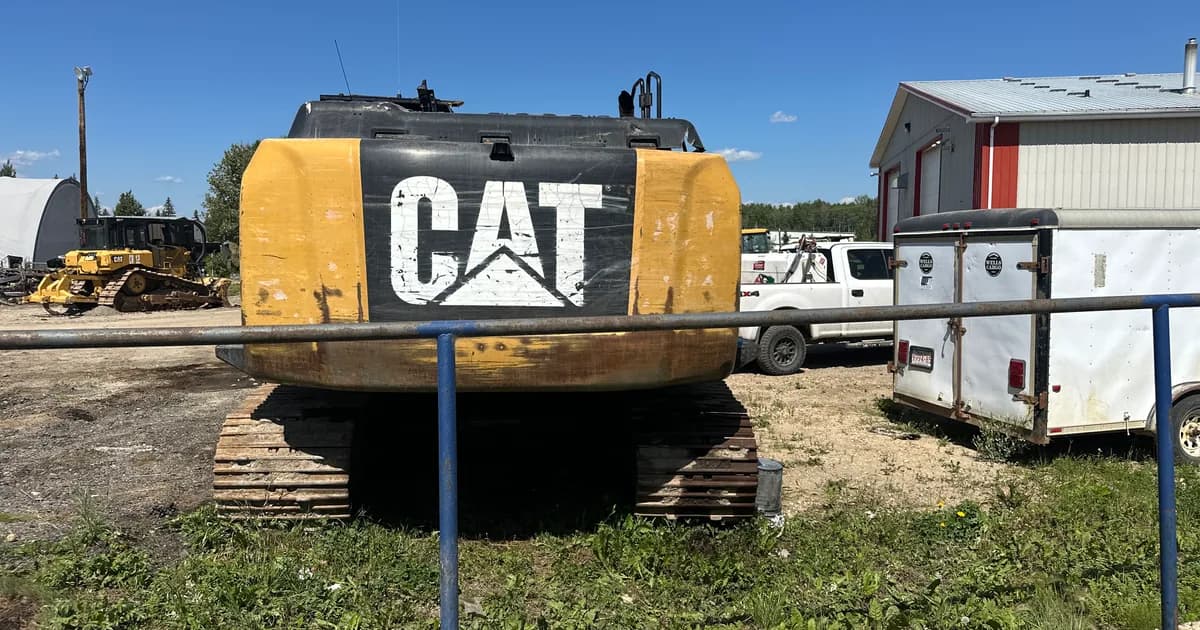
You found a 2012 Cat 320 — maybe a 320D L or a 320E — and the price is right. It has reasonable hours, the seller seems legitimate, and you know the machine can make you money starting next week. But here is your question: is anyone actually going to lend you money for a machine that is over a decade old?
The short answer is yes. A 2012 Cat 320 is financeable in Canada, but the deal looks different than financing a 2022 model. The lender pool is smaller, the terms are tighter, and you need to understand what lenders are thinking so you can put together a deal that works.
This guide covers not just the Cat 320 specifically but the broader question of how equipment age affects financing, what the thresholds are year by year, and what strategies you can use to finance older machines successfully.
Why the Cat 320 Is Specifically Financeable
Not all 2012 excavators are equal in a lender's eyes. A 2012 Cat 320 has specific advantages that make it more financeable than many other machines of the same age.
Market ubiquity. The Cat 320 is one of the most common mid-size excavators in North America. It is the F-150 of excavators — most people in the industry know what it is, know roughly what it is worth, and there is reliably a buyer for one. Lenders care about this because they need to know they can sell the machine if you default. A Cat 320 tends to move quickly; a 2012 excavator from a niche brand might sit on a lot for months.
Parts availability. Caterpillar's dealer and parts network is among the largest in the heavy equipment industry. A 2012 Cat 320 can be serviced at Cat dealers across Canada, and parts are readily available — both genuine Cat parts and quality aftermarket options. This means the machine can be kept running economically, which protects its useful life and its value.
Known resale values. Lenders and appraisers have extensive data on Cat 320 resale values across years, hour ranges, and condition levels. There is less guesswork than with an obscure brand — they can pull comparable sales and price the machine with reasonable confidence. That confidence makes them more willing to lend.
Proven reliability. The Cat 320D and 320E series have long track records for durability. Lenders know from portfolio data that these machines last and retain value, without systemic reliability problems that cause sudden value drops.
Compare that to a 2012 excavator from a brand with limited dealer presence in Canada — the lender would have little comparable sales data, no confidence in parts availability, and no assurance they could sell the machine quickly. That is why brand matters so much on older equipment.
Equipment Age: What Actually Decides the Deal
There is a myth that lenders run a simple "maximum age" rule — a year on a chart, past which the machine is dead to them. They do not. Whether an older machine gets approved comes down to a handful of factors working together, and the year on the decal is only one of them:
- Your credit. A stronger borrower opens more doors on older iron and offsets the age in the lender's eyes.
- Money down. This is the single biggest lever. More down shrinks the lender's exposure and is often what turns a "no" on an older machine into a "yes."
- Major-component work. Documented rebuilds or replacements — engine, hydraulics, undercarriage — put real life and value back into a machine and change how a lender sees its remaining useful life.
- Current hours. Lower hours for the age make the deal materially easier; high hours on an old machine is the hardest combination.
Banks and credit unions are the most conservative. They get cautious on older equipment quickly, and how far they will bend depends entirely on the factors above. Specialty and private lenders go considerably further — we have financed machines as old as the early 2000s — but how far they reach depends on their appetite at the time, which shifts with their portfolio and the market. There is no published age ceiling to point to; these deals are underwritten one at a time, on the strength of the buyer, the work lined up, the down payment, and the machine itself.
On term length, older machines run shorter. Realistically you are looking at about a four-year term, five years at the very most. A shorter term means a higher monthly payment for the same amount financed, so build that into your affordability math before you commit.
Key takeaway: There is no magic age cutoff. An older machine gets financed on the strength of the buyer, the down payment, the work history of the machine, and its hours — through the right lender, not a bank. Expect a shorter term (around four years) and plan the payment accordingly.
What Lenders Need to See on Older Machines
When you bring a 2012 Cat 320 (or any machine over 10 years old) to a lender, they are going to scrutinize it more than a newer machine. Here is what helps your application.
Reasonable hours for the age. A 2012 machine that has been running full-time for 14 years could have anywhere from 10,000 to 20,000+ hours. Lenders are more comfortable on the lower end. A 2012 Cat 320 with 6,000-8,000 hours is a much easier deal than one with 14,000 hours. Check our excavator hours guide for how hours feed into value and terms.
Maintenance records. This is where older machines are won or lost. A 2012 Cat 320 with dealer service records showing regular oil changes, filter replacements, hydraulic oil sampling, and any component rebuilds is a machine a lender can get behind. No records means the lender has to assume the worst.
A recent inspection. A pre-purchase inspection from a qualified mechanic — ideally a Cat dealer or an independent heavy equipment mechanic — gives the lender confidence that the machine is in the condition you claim. For a deal on older equipment, this is almost mandatory. Budget a few hundred dollars for the inspection. It is money well spent.
Clean title and lien history. Run a PPSA search (Personal Property Security Act) on the serial number to confirm there are no liens on the machine. This matters more on a 2012 model, which may have passed through multiple owners — and an undischarged lien follows the asset, meaning a previous owner's lender could repossess it even after you have paid. A search is cheap: in BC a self-serve Personal Property Registry search is $7 ($10 staff-assisted); other provinces have their own registries (Quebec uses the RDPRM). Have your broker run it before you commit.
Fair purchase price. The price needs to align with market value. A lender will compare your purchase price against recent sales of comparable machines. If you are paying market value or below, they are comfortable. If the price is inflated, they will not lend the full amount. Check our used excavator pricing guide for current market data.
Your credit and business strength. On newer equipment, a strong machine can partially compensate for weaker credit. On older equipment, lenders want both the machine and the borrower to be solid. If you have challenged credit and you are trying to finance a high-hour, older machine, the deal gets very difficult. One of those two factors needs to be strong.
Typical Terms for a 2012 Cat 320
Here is what realistic financing might look like on a 2012 Cat 320 in different scenarios. These are illustrative examples to show how the levers interact — not quotes, and the specific rates and prices vary by lender and current market. Equipment rates float off the prime rate (4.45% as of June 2026), with older machines landing toward the top of each credit tier.
Scenario 1: Good credit, low hours
- Machine: 2012 Cat 320D L, 5,500 hours, well maintained, dealer service records
- Borrower: 720 credit score, 8 years in business
- Illustrative terms: a higher rate than a newer machine would command, a 3-4 year term, ~15% down
- The strong brand, low hours, and records make this the most financeable older-machine profile
Scenario 2: Fair credit, moderate hours
- Machine: 2012 Cat 320E, 8,500 hours, decent condition, some records
- Borrower: 640 credit score, 4 years in business
- Illustrative terms: a fair-credit rate pushed toward the top of the tier, a 3-year term, ~20% down
- Workable, but the higher hours and thinner records mean more down and a shorter term
Scenario 3: Challenged credit, higher hours
- Machine: 2012 Cat 320D, 11,000 hours, fair condition, no records
- Borrower: 580 credit score, 2 years in business
- Illustrative terms: a high rate, a short (2-3 year) term, and a large (25-30%) down payment
- The toughest profile — it can still get done, but it is expensive and the down payment does the heavy lifting
Even in Scenario 3, the deal can work — it is just expensive. The real question is whether the machine generates enough revenue to justify the payments. A Cat 320 on a busy job site can generate strong monthly revenue, so even a tight financing scenario can pencil out if you have work lined up.
Strategies to Finance Older Machines
If you have your heart set on an older Cat 320 or similar machine, these strategies improve your odds of getting approved with reasonable terms.
Put more money down. The single most effective thing you can do. A larger down payment reduces the lender's risk, reduces the amount financed, and can unlock better rates and longer terms. On a 2012 machine, 20-25% down is a sensible target. If you can do 30%, you become a much more attractive borrower even with an older machine.
Choose the right lender from the start. Do not waste time at a bank with a 2012 machine. Go directly to a private lender or a broker like IronFinance who works with private lenders. Banks have rigid age policies they will not override. Private lenders evaluate each deal individually.
Get the inspection done before you apply. Proactively including an inspection report with your financing application shows the lender that the machine is in good shape and that you are a serious, prepared buyer. It removes uncertainty from their side of the equation.
Provide maintenance records. If the seller has service records, get copies. If the machine was dealer-serviced, ask the seller to get a service history printout from the Cat dealer. This is one of the strongest supporting documents you can include with a financing application on older equipment.
Show revenue to support the payments. Bank statements showing strong, consistent revenue reassure the lender that you can handle the payments. If you have contracts lined up for the machine, share them. Lenders on older-equipment deals want to see that the borrower has the cash flow to make payments even if something goes wrong with the machine.
Consider a shorter term voluntarily. If a lender is on the fence about a 4-year term, offering to do 3 years might get you approved. Yes, the payment is higher, but you also pay less total interest, and you own the machine sooner. If the monthly payment on a 3-year term is manageable, it might be the smart move.
Bundle with other equipment. If you are also financing a newer machine (say a Bobcat S650 and the 2012 Cat 320), bundling them together can help. The newer machine strengthens the overall package, and some lenders will offer better terms on a combined deal.
What About Machines Older Than 2012?
The further back you go, the smaller the lender pool — but financing stays on the table far longer than most contractors think. Traditional banks bow out early; specialty and private lenders keep going, because they underwrite the deal rather than the model year.
2008-2011 machines (roughly 15-18 years old): Banks will not touch them, but private and specialty lenders finance these regularly. Expect a meaningful down payment, a shorter term, and a higher rate — and a strong brand (Cat, Komatsu, John Deere) with reasonable hours and good condition makes it straightforward.
2005-2007 machines (roughly 19-21 years old): Still financeable through specialty lenders who find value in the file. The down payment matters more, the term is shorter, and the buyer's work pipeline plus the machine's condition and rebuild history carry the deal.
Early-2000s and older machines: Conventional financing is gone, but these deals still happen. We have financed units as old as 2000 through lenders who look at the whole picture — a buyer with work lined up, a solid down payment, and a well-maintained or reconditioned machine. The older the iron, the more those compensating factors have to be there, but the year alone does not disqualify it.
Key takeaway: Equipment age limits are not about the machine being unable to work — plenty of 2008 Cat excavators are running strong. It is about the lender's ability to recover their money if things go wrong. The older the machine, the less it is worth and the harder it is for the lender to get their capital back.
The Real Question: Does the Deal Make Financial Sense?
Beyond whether you can finance a 2012 Cat 320, the better question is whether you should. Here is the financial reality check.
Purchase price vs. a newer machine. A 2012 Cat 320 typically costs a fraction of what a recent model does. Even with a higher interest rate and shorter term on the older machine, your monthly payment can come out lower than financing a newer model over a longer term — because you are financing so much less. Check our used excavator pricing guide and current MachineryTrader or Ritchie Bros listings for real numbers on both before you decide.
Repair risk. Older machines break down more. A 2012 with 8,000+ hours could need major work in the next few years — an undercarriage rebuild, hydraulic cylinder work, or a turbocharger replacement can each run well into the thousands, and a full undercarriage into the tens of thousands. Budget for it, and weigh it against the lower purchase price.
Revenue potential. Here is the thing — a 2012 Cat 320 digs the same hole as a 2024 Cat 320. The work it does and the revenue it generates are the same. If you have contracts waiting and the older machine will produce revenue from day one, financing it makes business sense even if the terms are not ideal.
Exit strategy. Think about what happens when you are done. A 2012 Cat 320 you finance for 3 years will be a 2012 Cat 320 with 3 more years of hours when you are done paying. If you plan to run it until it owes you nothing and then sell it for whatever it brings, that is fine. If you are hoping to trade it in for something newer, do not expect much trade value.
Rate references reflect the prime rate of 4.45% as of June 2026. Scenario rates, resale prices, and repair-cost figures are illustrative, not quotes — verify current values against live MachineryTrader / Ritchie Bros listings and a dealer service quote before you commit.
Sources: PPSA search (Personal Property Security Act) — Province of British Columbia. Rate, term, down-payment and approval-timing figures are directional practitioner conventions current as of August 2026 — they move with the prime rate, vary by lender and by machine, and are not quotes or approvals. Equipment prices are asking prices rather than transaction prices. Tax treatment depends on your own contract and circumstances; confirm with your accountant.
Next Steps
If you are looking at a 2012 Cat 320 or any older piece of equipment and wondering whether you can finance it, the fastest way to find out is to bring the details to someone who works with the lenders that handle these deals. At IronFinance, we work with private lenders across Canada who finance older equipment for contractors. Send us the serial number, the asking price, and the hours, and we will tell you what is realistic.
For more context on excavator financing, check out our complete excavator financing guide, our breakdown of what excavator hours mean for financing, and our overview of used excavator pricing in Canada to make sure the price you are paying is fair.
Already own equipment, or eyeing a different machine?
Frequently Asked Questions
What is the oldest piece of equipment you can finance in Canada?
There is no hard age limit, and no simple 'maximum age' rule. Traditional banks are the most conservative and get cautious on older equipment — but even there it comes down to the buyer's credit, the money down, major-component work done on the machine, and its current hours, not a fixed age. Specialty and private lenders go much further; we have placed deals on units as old as the early 2000s. They underwrite the deal — the buyer, the work and contracts lined up, the down payment, and the machine's condition and rebuild history — so a strong, well-maintained machine with a solid down payment and a buyer who has work waiting gets financed regardless of the year on the decal.
Why is a Cat 320 easier to finance than other older excavators?
The Cat 320 is one of the most common mid-size excavators in North America. It has an enormous parts network, every Cat dealer services them, and there is a deep resale market. Lenders are more comfortable knowing that even a 2012 Cat 320 in decent condition can be sold to recover their money — confidence they often do not have with lesser-known brands at the same age.
What interest rate should I expect on a 2012 Cat 320?
Rates on older equipment sit at the higher end of each credit tier. Equipment rates overall run from the high single digits for excellent credit up into the high teens (occasionally low 20s) for challenged credit, and an older machine pushes you toward the top of your tier. Expect to pay more than you would on a newer unit; your exact rate depends on credit, down payment, hours, and the lender.
Do lenders judge equipment age from the model year or from remaining useful life?
Effectively from remaining useful life, expressed through the term. The question a lender asks is what the machine will be worth at the end of the amortisation, not how old it is today. That is why a 2012 machine on a 36-month term can be straightforward while the same machine on a 72-month term is not — the second structure leaves the lender exposed to a fifteen-year-old asset. If an older machine is being declined, shortening the term is often a more effective fix than adding rate.
Will a lender want an inspection or appraisal on a machine this age?
Frequently, and you should want one regardless. On an older machine the spread between a well-maintained unit and a tired one is enormous, and the lender is advancing against appraised value rather than the asking price. Budget for an inspection and be ready to supply photographs of the hour meter and the serial plate, service records if they exist, and an explanation for anything unusual. A machine that appraises cleanly at this age often finances better than a newer machine with an unexplained history.