
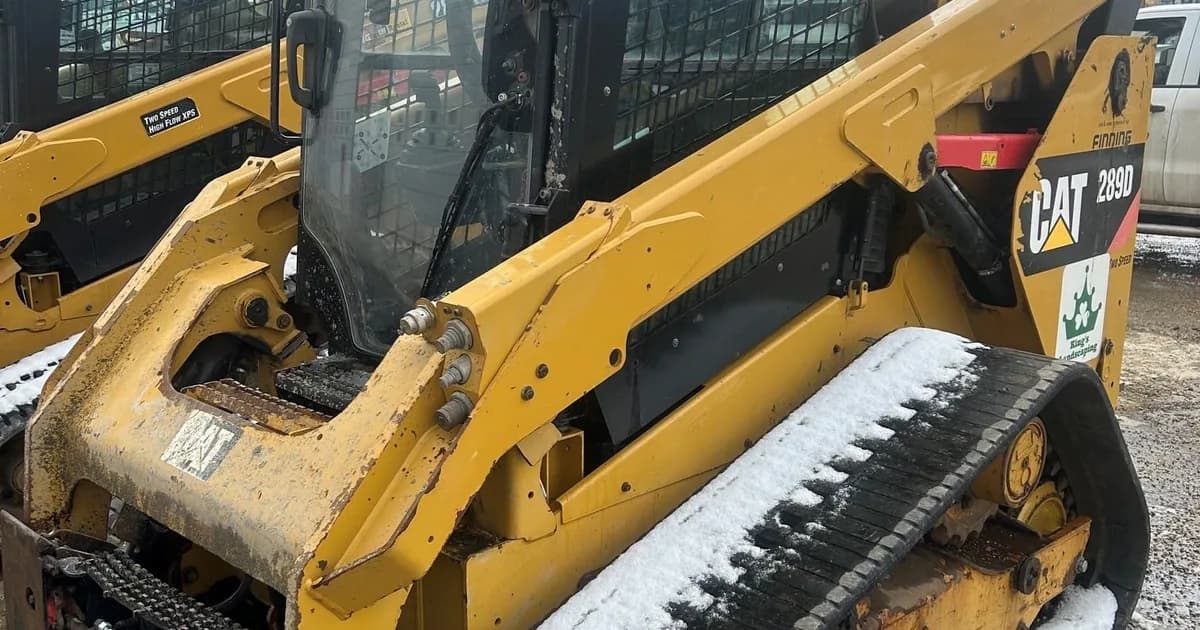
You are looking at a used Bobcat S650 listed for $34,000 with 4,200 hours. Or maybe a Cat 262D3 with 6,800 hours for $28,000. The price looks right, but you are wondering: are those hours too many? Is the machine about to become a money pit, or does it have years of work left?
This is one of the most important questions you can ask before buying a used skid steer, and the answer is not as simple as a single number. Hours on a skid steer are different from hours on an excavator or a dozer, and understanding why will help you make a smarter buying decision.
Why Skid Steer Hours Are Different
Here is something most people do not realize: a skid steer works harder per hour than almost any other piece of equipment on a job site. Every hour on a skid steer involves constant stress on the machine.
Think about what a skid steer does all day. It pushes into a pile, lifts a full bucket, drives across rough ground, dumps the load, and turns back to do it again. The entire time, the drivetrain is under load, the hydraulics are working, and the machine is twisting and flexing. A skid steer turns by locking one side and spinning the other — that is brutal on tires, chains, drive motors, and the frame itself.
Compare that to an excavator, which sits in one spot and swings a boom. The undercarriage on an excavator is not fighting the ground every second. The frame is not flexing under load the same way.
This means 5,000 hours on a skid steer is not the same as 5,000 hours on an excavator. Those 5,000 skid steer hours represent more wear on the drivetrain and frame — the machine has spent its whole life skidding, twisting, and loading rather than sitting and swinging a boom. You will hear people put a number on it ("one skid steer hour equals two excavator hours"), but there is no published or engineering basis for any such multiplier. Treat it as shop-floor shorthand for a real qualitative difference, not a measurement.
Key takeaway: Do not compare skid steer hours to excavator hours. A skid steer with 5,000 hours has been worked harder than an excavator with 5,000 hours. Adjust your expectations accordingly.
Wheeled or Tracked? The Undercarriage Changes Everything
Before you read a single hour number, find out whether you are looking at a wheeled skid steer (SSL) or a compact track loader (CTL) on rubber tracks — because they age, cost, and finance differently, and most of the market is now tracked. Compact track loaders have gone from a niche to roughly 80% of new compact-loader sales in North America (US/North-American data — no Canadian-specific share is published, but the Canadian market follows the same trend).
The difference that matters for hours is the undercarriage. A wheeled machine wears tires and the hydrostatic drive. A tracked machine adds a whole wear-and-cost system a wheeled unit simply does not have: rubber tracks, plus rollers, idlers, and sprockets that all wear with hours.
Rubber tracks are a wear item, not a one-time part. Quality tracks typically last 1,200–1,600 hours in normal use — longer in soft earthwork, much shorter on abrasive concrete or pavement (Cat puts the full range at 400–2,000 hours; figures are US trade-press). On a high-hour CTL the tracks have likely been replaced once or twice already, and a machine wearing a brand-new set right before sale can be dressing up hard prior use.
The rest of the undercarriage adds up. Rollers, idlers, and sprockets wear alongside the tracks. From a Canadian supplier, individual parts run (CAD) roughly: track rollers $160–$390, idlers $400–$900, sprockets $170–$400, and carrier rollers $130–$195 each (Undercarriage Warehouse Canada) — and a CTL carries several of each, so a full undercarriage refresh is a four-figure-plus job, not a $200 part swap.
Key takeaway: On a compact track loader, undercarriage condition can make or break the deal. Two CTLs at the same hours can be thousands of dollars apart depending on whether the tracks and rollers are fresh or finished. Inspect the undercarriage before you fixate on the hour meter — and on a tracked machine that has been run hard on abrasive ground, expect that worn undercarriage to pull both the price and the financing terms down through the value math below.
Hour Thresholds: What the Numbers Mean
Let us break down what different hour ranges mean for a used skid steer, what you should expect at each level, and what it means for your buying decision.
| Hours | Condition Category | What to Expect | Financing Impact |
|---|---|---|---|
| 0 - 1,500 | Low Hours | Nearly new feel, minimal wear, all original components likely fine | Easiest to finance, best rates, longest terms |
| 1,500 - 3,000 | Moderate | Proven machine, normal wear items replaced, still plenty of life | Very financeable, standard terms |
| 3,000 - 5,000 | Working Machine | Visible wear, may need some hydraulic or drivetrain attention soon | Financeable with good lender, standard down payment |
| 5,000 - 7,000 | High Hours | Expect maintenance costs to increase, major components may need attention | Some lenders cautious, higher down payment possible |
| 7,000 - 10,000 | Very High | Approaching end of primary useful life, significant repairs likely | Harder to finance, shorter terms, more down |
| 10,000+ | Extreme | Major rebuilds likely needed or already done, frame fatigue possible | Most lenders pass, private lending or cash |
These ranges are generalizations, and the financing column is a tendency, not a rulebook — as the financing section below explains, no Canadian lender posts an hours cutoff; hours move your terms through the machine's value and remaining useful life. A Bobcat S650 with 6,000 hours that was dealer-maintained, ran in clean sand for a landscaping company, and had its hydraulic oil changed on schedule can be in better shape than a 3,000-hour machine that was abused on a demolition site and never had the oil changed.
What 3,000 Hours Looks Like
At 3,000 hours, a skid steer is solidly into its working life but far from worn out. This is often the sweet spot for used buyers.
What should have been done by now:
- Multiple engine oil and filter changes (every 250-500 hours)
- Hydraulic oil and filter changes (every 1,000-1,500 hours)
- Probably one or two sets of tires (or track replacements on a CTL)
- Drive belt replacement
- Air filter replacements
- Possibly a set of bucket teeth
What to inspect at 3,000 hours:
- Hydraulic hoses for cracking, swelling, or weeping
- Lift arm pins and bushings for play (grab the bucket and try to wiggle the arms)
- Cab for cracks around the ROPS mount points
- Engine for blow-by (remove the oil fill cap with the engine running — excessive smoke means worn rings)
- All cylinders for leaks or scoring
- Drive chains or belts (depending on brand)
A well-maintained machine at 3,000 hours should have another 3,000 to 5,000 hours of solid service ahead of it. This is a good buy if the price is right and the maintenance records check out. Financing is straightforward — most lenders treat a 3,000-hour skid steer as a standard used equipment deal. For more on financing options, see our complete skid steer financing guide.
What 5,000 Hours Looks Like
At 5,000 hours, you are past the halfway mark on most skid steers. This is where maintenance history becomes critical, because a well-maintained machine can still have years of life, but a neglected one is about to get expensive.
What should have been done by now:
- Everything on the 3,000-hour list, multiple times
- Hydraulic pump inspection or reseal
- At least one alternator replacement
- Several tire or track changes
- Possible drive motor reseal or replacement
- Coolant system flush and thermostat replacement
- Possibly a set of loader arm bushings
What to watch for at 5,000 hours:
- Hydraulic system performance — slow cycle times mean the pump is wearing
- Unusual noises from the drive motors or final drives
- Frame cracks, especially around the loader arm pivots and rear axle mounts
- Engine oil consumption — if it is burning oil between changes, the engine is wearing
- Electrical gremlins — wiring harnesses fatigue after years of vibration
The price should reflect the hours. A 5,000-hour Bobcat S650 should be priced well below a comparable low-hour machine — often by something like a third to a half, though that is a directional rule of thumb, not a Canadian-auction figure. If the seller is asking near low-hour prices, walk away. You can see current market pricing in our used skid steer pricing guide.
Key takeaway: At 5,000 hours, the machine's history matters more than the hour number itself. A 5,000-hour skid steer with full maintenance records from a reputable dealer is a far better buy than a 3,000-hour machine with no records and unknown history.
What 8,000 Hours Looks Like
At 8,000 hours, a skid steer is in the final third of its useful life. That does not mean it is junk — plenty of machines work past 8,000 hours — but you need to go in with open eyes about what you are buying.
What has likely been replaced or rebuilt:
- Hydraulic pump (possibly twice)
- At least one drive motor
- Multiple sets of tires or tracks
- Loader arm pins and bushings (possibly multiple times)
- Several hydraulic cylinders resealed
- Alternator, starter, and various electrical components
- Cab suspension seat, joystick boots, and wear items
Red flags at 8,000 hours:
- Frame cracks that have been welded — this is a sign of structural fatigue and the crack will likely come back
- Hydraulic system that runs hot — the pump is struggling
- Excessive play in the loader arms — worn pins and bores that may need sleeving
- Engine blowing blue or white smoke — major engine work ahead
- Tracks or tires that were recently replaced on a machine being sold — the seller may be dressing it up for sale
Financing at 8,000 hours: Most mainstream equipment lenders are cautious here. You will likely need 20% or more down, and terms will be limited to 2-3 years. Some lenders will pass entirely and you will need to look at private lending. Our bad credit skid steer financing guide covers options when traditional lenders say no.
Inspection Checklist by Hour Range
Use this checklist when inspecting a used skid steer. The items marked are what you need to pay special attention to at each hour range.
Under 3,000 Hours — Standard Inspection:
- Verify hours match maintenance records
- Check all fluids (engine oil, hydraulic fluid, coolant)
- Test all functions (lift, tilt, drive, auxiliary hydraulics)
- Look for leaks under the machine
- Check tire or track condition
- Start cold and listen for unusual noises
- Test the backup alarm, lights, and gauges
3,000 to 5,000 Hours — Add These Checks:
- Hydraulic cycle times (lift and tilt should be crisp, not sluggish)
- Loader arm pins (grab the bucket edge and push side-to-side)
- Frame weld points around loader pivots and axle mounts
- Drive performance (should not pull to one side)
- Engine blow-by test
- Check hydraulic oil for metal particles (take a sample if possible)
5,000 to 8,000 Hours — Add These Checks:
- Request an oil analysis if possible (tells you about internal engine wear)
- Check final drives for noise and leaks
- Look for any welded frame repairs
- Test auxiliary hydraulic flow with an attachment
- Check cab for cracks around ROPS
- Look at wiring harness condition
- Check undercarriage for roller and idler wear (CTL models)
Over 8,000 Hours — Seriously Consider:
- Having a dealer or independent mechanic do a full inspection ($300-$500)
- Getting a hydraulic flow test
- Budgeting $5,000 to $10,000 for near-term repairs
- Negotiating the price down to reflect expected maintenance
How Hours Affect Resale Value
Hours are the single biggest factor in a used skid steer's resale value, after brand and model. Here is how value typically drops as hours accumulate on a medium-frame skid steer like a Bobcat S650.
| Hours | Approximate Value (% of New) | Example: $60,000 New |
|---|---|---|
| 500 | 80-85% | $48,000 - $51,000 |
| 1,500 | 65-75% | $39,000 - $45,000 |
| 3,000 | 50-60% | $30,000 - $36,000 |
| 5,000 | 35-45% | $21,000 - $27,000 |
| 7,000 | 25-35% | $15,000 - $21,000 |
| 10,000 | 15-25% | $9,000 - $15,000 |
These percentages are directional illustrations, not Canadian auction data — no published Ritchie Bros or MachineryTrader Canada dataset breaks skid-steer resale down by hour band, so use them to understand the shape of the curve, not to price a specific machine. Year, condition, location, and market demand all move the actual number. But the trend is reliable: value drops steeply in the first 2,000-3,000 hours, then the decline flattens out. Buying in the 2,000-4,000 hour range often gives you the best value because someone else has already absorbed the steepest depreciation.
How Hours Affect Financing
Lenders think about hours in terms of risk, but not as a pass/fail gate. There is no published hours cutoff in Canada — lenders size the loan term to the machine's remaining useful life and read hours as one input into its value. BDC amortizes equipment "based on the useful life of the asset." Because a skid steer is a smaller, shorter-lived machine than an excavator, that useful-life math naturally produces shorter terms and larger down payments as the hours climb — not because a rule trips at a magic number, but because there is less machine left to secure the loan.
Two skid-steer-specific wrinkles change the picture:
Recovery risk rewards common brands. A cheaper off-brand or older high-hour skid steer can cost more to finance than a cleaner, low-hour Bobcat or Cat — not because the lender is brand-snobbish, but because if it has to repossess and resell, a common model with a deep resale market is easier to recover on (Mehmi Group, a Canadian broker).
The small ticket cuts both ways. Skid steers are cheap enough ($25,000-$70,000) that financing is usually fast on a clean machine — but a very cheap, high-hour unit can fall below some lenders' minimum deal size or simply not be worth their underwriting, which is exactly where a broker who knows the smaller-ticket lenders earns their keep.
Here is the tendency most equipment lenders show on skid steers — read it as condition-and-value driven, not a posted schedule:
| Hours | Lender Comfort Level | Typical Terms Available |
|---|---|---|
| Under 2,000 | Very comfortable | Up to 6-7 years, 10% down, competitive rates |
| 2,000 - 4,000 | Comfortable | Up to 5 years, 10-15% down |
| 4,000 - 6,000 | Moderate | 3-4 years, 15-20% down |
| 6,000 - 8,000 | Cautious | 2-3 years, 20%+ down, higher rates |
| Over 8,000 | Reluctant | Private lenders, 25%+ down, short terms |
The age of the machine matters alongside the hours. A 2022 Bobcat S650 with 4,000 hours was worked hard but it is still a recent-year machine. A 2014 Bobcat S650 with 4,000 hours was barely used but it is old. Lenders factor both into their decision.
Red Flags That Matter More Than Hours
Sometimes the hour number is less important than what you find when you inspect the machine. Here are red flags that should make you walk away regardless of the hours.
Mismatched hours. If the hour meter has been replaced or does not match the service records, walk away. The most reliable reading comes from the machine's telematics, which pull hours straight from the ECU — Bobcat Machine IQ, Cat Product Link, and John Deere JDLink all do this — though as a used buyer you usually need the seller's cooperation or a dealer to run the serial number. Cross-reference the ECM readout against the maintenance stickers and any dealer service records. Misrepresenting a machine's hours is illegal in Canada, but enforcement is thin, so verify rather than trust.
Frame cracks. A cracked frame on a skid steer is a structural integrity issue. Small cracks around high-stress areas can be welded, but cracks that have been welded and re-cracked indicate a frame that has reached its fatigue limit. If you see welds that are not factory, ask questions.
Hydraulic system problems. Slow cycle times, overheating hydraulic fluid, or a pump that screams under load all indicate a hydraulic system that is wearing out. Rebuilding or replacing a skid-steer hydraulic pump is a serious four-figure repair, so any of those symptoms should change the price or kill the deal — and they are worth extra scrutiny on a machine that has run power-hungry attachments like a mulcher, cold planer, or breaker hard on its high-flow hydraulics.
Heavy rust or water damage. Skid steers that sat outside in wet conditions without proper storage show it. Rust on the frame, corroded electrical connectors, and water-damaged cab components are expensive to fix and indicate neglect.
No maintenance records at all. If the owner cannot produce a single oil change receipt, invoice from a mechanic, or dealer service record, assume the worst. Well-maintained machines have paperwork.
Ex-rental provenance. A lot of used skid steers — especially CTLs — come off rental fleets, and a large wave of ex-rental machines is hitting the used market right now (US trade-press observation). That is not automatically bad — rental fleets usually follow strict hour-based service schedules — but rental machines also rack up hours fast under many different operators, so treat ex-rental as a mixed bag: verify the records and inspect the undercarriage and hydraulics rather than assuming fleet maintenance kept it pristine.
⚠Key takeaway: A machine with moderate hours and complete maintenance records is almost always a better buy than a low-hour machine with no history. The records tell the real story.
So How Many Hours Is Too Many?
There is no single number. But here is a practical framework.
If you are buying a skid steer to run it every day as a core piece of your operation, and you plan to keep it for 3 to 5 years, look for something under 4,000 hours. You will get solid performance, reasonable financing terms, and a machine that still has good resale value when you are ready to trade up.
If you are buying a backup machine, something for part-time use, or a unit for a specific project, a machine with 5,000 to 7,000 hours can be a great deal if the price is right and it has been maintained. Just budget for more maintenance and understand that financing options may be limited.
Over 8,000 hours, you are buying a machine that is in the last chapter of its life. That can still make financial sense if the price is low enough and you have a mechanic who can keep it running, but it is a different kind of purchase — more of a calculated risk than a straightforward investment.
Sources: lender practice — BDC (Canadian; amortization based on the asset's useful life) and Mehmi Group (Canadian broker); undercarriage component pricing in CAD — Undercarriage Warehouse Canada; rubber-track life and CTL market share — Cat Used and CompactEquip (US/North-American trade press). Service-life, resale, and market-share figures are directional US trade-press estimates, not Canadian auction data — verify a specific machine against its telematics, service records, and a pre-purchase inspection. Information current as of June 2026.
Whatever the hours, always inspect the machine, check the records, and have a realistic maintenance budget. If you need help financing a used skid steer at any hour range, you can apply with IronFinance and we will match you with a lender who fits your situation. We have helped contractors finance machines at every hour range, and we will give you a straight answer about what is realistic for the machine you are looking at.
For related reading, see our hours guides for the excavator, dozer, skidder, wheel loader, motor grader, backhoe, and telehandler, plus how hours feed into current equipment loan rates.
Already own equipment, or eyeing a different machine?
Frequently Asked Questions
How many hours does a skid steer last?
A well-maintained skid steer from a major brand like Bobcat, Cat, or John Deere can last 6,000 to 10,000 hours before needing major component rebuilds. Some machines go beyond 10,000 hours with proper care, but expect increasing repair costs after 5,000 hours. The engine may last longer than the hydraulic system, drivetrain, and structural components.
Is 5,000 hours a lot on a skid steer?
Yes, 5,000 hours on a skid steer is meaningful. Skid steers work harder per hour than most equipment because they are constantly turning, pushing, and loading under stress. At 5,000 hours, you are past the halfway point of the machine's primary useful life, and you should expect to start seeing hydraulic and drivetrain maintenance needs increase.
Is 4,000 hours a lot for a skid steer?
Not really — 4,000 hours is mid-life for a well-kept skid steer, which commonly runs 6,000-10,000 hours before major-component decisions. Because a skid steer works hard per hour, condition matters more than the number: check the hydraulics, the drivetrain, and (on a tracked unit) the rubber tracks and rollers. For financing, 4,000 hours sits comfortably inside a normal term, since Canadian lenders cap on the machine's age at the end of the loan, not on hours.
Is 6,000 hours a lot for a skid steer?
It is at the higher end but far from a dealbreaker. At 6,000 hours a well-maintained machine still works, but repair costs climb, so a documented service history and an undercarriage inspection matter most. Financing is still available — lenders read the higher hours as lower collateral value and offset with more down or a shorter term rather than a flat decline.
Should I buy a skid steer with 3,000 hours?
A skid steer with 3,000 hours from a reputable brand is generally a solid buy, assuming it has been maintained. At 3,000 hours, the machine has proven it works without early failures, but it still has several thousand hours of useful life ahead. Inspect the hydraulic system, check for frame cracks, and review maintenance records before buying.