
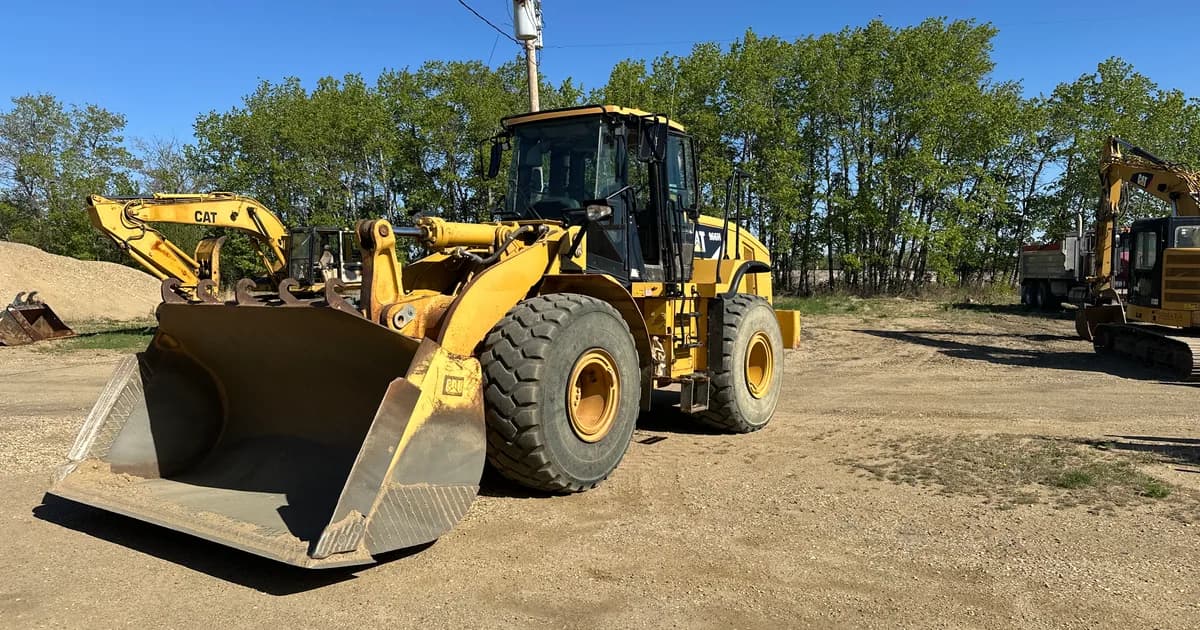
Nobody finances a machine planning to default. You buy the Cat 330 or the Komatsu dozer because the work is lined up and the iron is going to pay for itself. But things go sideways sometimes — a contract collapses, a big customer stops paying, the economy cools, the machine throws a final drive and the repair eats your reserve.
Here is the thing I want you to take from this guide: default is not a cliff you fall off, it is a road with off-ramps. There is a process, it takes weeks to months, and at almost every stage you have a way to change the outcome — if you see it coming and act. The contractors who get wrecked by a default are usually the ones who went quiet and hoped. The ones who come through it are the ones who knew the map. So this is the map — the timeline, your legal rights, where the exits are, and how the rules differ depending on where you operate.
The timeline: missed payment to repossession
Day 1–30: first missed payment
You miss a payment; the lender's system flags it; you get a late notice and usually a late fee (often a few percent of the payment or a flat charge). One missed payment is a late payment, not a default — most contractors hit one at some point on a cash-flow timing issue. Pay within the grace period (commonly 10–15 days) and many lenders waive or reduce the fee.
Off-ramp: pay it as soon as you can. If you cannot pay in full, call the lender and say so — that one call is the most important move in this whole guide (see below).
Day 30–60: second missed payment
Now it reads as a pattern, not an oversight. Communications get firmer, and the lender may report the delinquency to Equifax and TransUnion. A reported late payment hurts — there is no fixed number of points it costs (Canadian scoring does not deduct set amounts), but the hit is real and grows the longer it runs.
Off-ramp: call before they call you. Explain what happened, bring a plan to catch up, ask about restructuring. Most lenders would rather restructure than repossess.
Day 60–90: formal default
After 60–90 days the lender typically issues a formal default notice — the legal document stating you are in default and setting out its rights, including (under your loan agreement) the right to accelerate the loan, meaning demand the entire remaining balance at once, and to repossess. Acceleration is a contract term, so the exact trigger is written into your agreement — worth reading before you ever need to.
Key takeaway: The formal default notice is serious, but it is also your clearest last chance before repossession. If there is any way to bring the account current — a line of credit, family, selling another asset — this is the moment.
Day 90+: repossession — and how it actually works
This is where the rules diverge sharply depending on where you operate.
In the common-law provinces (everywhere except Quebec), your loan is secured under the Personal Property Security Act, and the PPSA lets a lender repossess on default without a court order — self-help seizure. But there is a hard limit: it must be done peacefully. A recovery agent cannot use force, break into a locked building or compound, or threaten you, and if you are present and refuse, they must back off rather than escalate. They also cannot show up the morning after a missed payment — the Ontario Court of Appeal has held (in a 2021 decision rooted in long-standing Supreme Court authority) that even when your agreement says "on demand," you must be given reasonable notice and time to act before seizure. "Reasonable" is judged on the facts, not a fixed number of days.
Once the machine is seized, before the lender can sell it the PPSA requires advance written notice of the intended sale — at least 15 days in Ontario (the period varies by province) — and up until that sale you generally keep the right to redeem the equipment by paying off what you owe. These are PPSA default protections; a commercial security agreement can sometimes waive or vary them, which is one more reason to actually read your contract.
The lender must also sell in a commercially reasonable manner — it cannot dump the machine to a buddy for a fraction of its worth. But "commercially reasonable" is not "retail." Forced sales and auctions routinely land well below what you would get selling the machine yourself, and used-equipment auction values have normalized off the 2021–2023 peak, so do not assume a strong recovery price.
Quebec works completely differently
If your business operates in Quebec, almost none of the above applies the same way — and the differences run in your favour on timing. Quebec security is not a PPSA interest; it is a hypothec under the Civil Code, and there is no self-help repossession. Before a creditor can act, it must register and serve a prior notice that spells out the default and demands you surrender the equipment, then wait out a statutory delay — 20 days for commercial movable property like equipment (Civil Code arts. 2757–2758). During that window, and right up until the machine is sold or taken in payment, you can stop the entire process by paying what is owed or remedying the default, plus costs (art. 2761). And if you do not hand the equipment over voluntarily, the creditor cannot simply take it — it must go to the Superior Court of Québec for a forced-surrender order, a motion generally heard about 30 days after it is filed. Unlike in the common-law provinces, these protections and delays cannot be waived in your contract (BLG). The creditor still must sell at a commercially reasonable price and can still pursue you for a shortfall — but the road to repossession in Quebec is slower and court-supervised.
After repossession: the deficiency balance
This is the part that catches people off guard — the story does not end when the machine is gone.
If the sale does not cover the remaining balance plus costs (late fees, legal, repossession, transport, storage, auction fees), you owe the difference. That is the deficiency balance.
| Item | Amount |
|---|---|
| Remaining loan balance at default | $142,000 |
| Late fees and penalties | $3,200 |
| Legal and collection costs | $4,500 |
| Repossession and transport | $6,800 |
| Auction / storage fees | $3,500 |
| Total owed | $160,000 |
| Equipment sold at auction for | $95,000 |
| Deficiency you still owe | $65,000 |
That $65,000 becomes an unsecured debt the lender can pursue through collections, a lawsuit and judgment, wage garnishment (if a court grants it), or liens on other property. And because virtually every equipment loan includes a personal guarantee — even for incorporated businesses — your personal assets are exposed. Our sole proprietor guide covers the personal-guarantee reality in detail.
One myth to clear up: "seize or sue" usually will not save you here. You may have heard a lender must choose between taking the equipment or suing you, not both. That rule is real — but it applies to consumer goods (a personal vehicle, household items), under provisions like BC's PPSA s.67 or Alberta's Law of Property Act. It generally does not protect commercial equipment. On a business equipment loan, the lender can seize the machine, sell it, and sue you for the deficiency. Do not count on seize-or-sue to erase a shortfall on a contractor's deal — it almost never does.
What a default does to your credit
A default has a severe, lasting effect — but be skeptical of anyone quoting an exact point drop. Canadian credit scoring does not work on fixed deductions, so "minus 200 points" is a US-style myth. What is true: a reported default can pull a strong score down by a hundred points or more, often into the range where mainstream lenders stop approving anything. The default itself stays on your report for about six years (up to seven at TransUnion in some provinces), the same window as other serious negative items.
The fallout cascades past equipment financing — it can affect vehicle loans, commercial or residential leases, insurance pricing, credit cards and lines of credit, and even contracts with companies that run credit as part of vendor qualification. Our credit score guide covers how the number drives your options.
How to avoid default
Prevention beats recovery every time.
Budget with a cushion. Assume the payment plus 20–30% for insurance, maintenance, and slow months. A $5,000 payment should sit inside a $6,000–$6,500 monthly equipment budget.
Build a payment reserve. Ideally three to six months of payments in accessible cash before you take the loan on — that reserve carries you through a seasonal dip or a surprise repair.
Match the machine to confirmed revenue. Do not finance a $300,000 machine on revenue you hope to win. If you have $15,000/month in contracted work, your payment should not exceed $5,000–$6,000, leaving room for operating costs and profit.
Watch cash flow weekly. Spotting a shortfall two or three weeks out gives you time to chase invoices, line up work, or call the lender before the due date — not after.
Keep the machine maintained. A deferred $5,000 repair becomes a $20,000 failure that parks the machine for weeks — weeks it is not earning but the payment is still due.
⚠Key takeaway: Default almost never arrives suddenly. The warning signs — falling work volume, thinning reserves, deferred maintenance, slow-paying clients — show up first. Reading them early is what gives you time to act.
If you are already struggling
Your options, best to worst.
1. Talk to your lender early. The single most important move — call before you miss a payment, not after. Lenders hear from struggling borrowers daily; what they cannot work with is silence followed by missed payments. Be direct: what is causing the crunch, what you can pay and when, what relief is available. A restructured performing loan beats a repossession for them too.
2. Ask for a restructure. Common options: a payment deferral (skip 1–3 payments, add them to the end; interest still accrues), a term extension (lower the monthly, pay more total interest), interest-only for a stretch while cash flow rebuilds, or a seasonal adjustment (bigger payments in busy months, smaller in slow ones).
3. Refinance. If your current lender will not flex, another may refinance at different terms — works best while the machine still has value relative to the balance and your credit has not yet been hammered by missed payments. Factor in refinancing costs.
4. Sell it privately. If the machine is worth more than you owe, sell it, clear the loan, and the problem is gone — you keep your credit and dodge a deficiency. Even if it is worth slightly less, covering a small shortfall yourself beats letting it go to auction, where the price will create a much bigger deficiency. The lender has to release the lien for the sale, and most will if the proceeds cover or nearly cover the balance.
5. Voluntary surrender. If you cannot pay and cannot sell for enough, handing the machine back voluntarily beats waiting for a forced repossession — it avoids repossession costs piling onto your debt, shows good faith, can lead to a better deficiency negotiation, and spares you a bailiff at the job site. It still hurts your credit and can still leave a deficiency, but the overall outcome is usually better.
Legal points worth knowing
Provincial law varies — a lot. As above, common-law provinces use self-help PPSA seizure while Quebec requires prior notice and often a court order, and even the notice periods and seize-or-sue scope differ province to province. If you are facing default, a lawyer who knows your province is worth the call.
Your loan agreement controls. It defines the default triggers, notice requirements, and the lender's remedies — and in the common-law provinces it can vary some of the PPSA defaults. Pull it out and read the default section now, before you need it.
Personal guarantees are enforceable. If you signed one — and you almost certainly did — the lender can pursue your personal assets for a deficiency, potentially including a lien on your home.
Bankruptcy and consumer proposals are real tools with real costs. They can eliminate or restructure debt but carry years of credit impact (a consumer proposal stays on your report 3 years after you pay it off, or 6 from filing, whichever is sooner). Consider them only with a licensed insolvency trustee.
Do not hide or damage the machine. Moving a financed machine to dodge repossession, or letting it deteriorate to cut its value, can expose you to fraud and other claims on top of the debt — and it destroys any goodwill with a lender who might otherwise have worked with you. It is the worst version of every bad option.
Key takeaway: A one-hour consult with a lawyer in your province costs a few hundred dollars and is one of the cheapest, most valuable moves you can make when default looms — it tells you your real rights, your real exposure, and your best path.
Starting over after a default
A default is painful, not permanent. Plenty of successful contractors hit one early — overextended, or caught by a downturn — and came back. The path:
Let the clock run. The default falls off your report in about six years, and your score improves before that as you add positive activity.
Rebuild deliberately. A secured credit card, small purchases paid in full monthly, then a small unsecured card after 6–12 months — a steady on-time history.
Start small on equipment. When you finance again, begin with a smaller machine and a clean repayment record; an on-time history on a $30,000 loan goes a long way toward the next, larger one.
Use lenders who handle second chances. Some alternative lenders specialize in borrowers who have been through difficulty — higher rates, but a real path back. Our bad credit financing guide covers the strategies.
Be upfront about the history. Lenders will see it on your report anyway — addressing it directly (what happened, what you learned, what is different) is far more persuasive than hoping they miss it.
Sources: Normalized off the 2021–2023 peak — Equipment World; Civil Code arts. 2757–2758 — Légis Québec; BLG; Weilers LLP; Cassels. Rate, term, down-payment and approval-timing figures are directional practitioner conventions current as of August 2026 — they move with the prime rate, vary by lender and by machine, and are not quotes or approvals. Equipment prices are asking prices rather than transaction prices. Tax treatment depends on your own contract and circumstances; confirm with your accountant.
The bottom line
Default is serious: it costs you the machine, damages your credit for years, can leave you owing money after the iron is gone, and brings real stress. But it is survivable — and in most cases avoidable — if you communicate early, budget with a cushion, and act at the first sign of trouble instead of going quiet.
Sources: Common-law self-help repossession and notice before seizure — Weilers LLP (Ontario PPSA, Priest/Lister); BC seize-or-sue and consumer-goods scope — Cassels; Quebec hypothec enforcement (prior notice, delays, forced surrender, deficiency) — Civil Code of Québec arts. 2748–2789 and BLG; used-equipment value trends — RB Global / Ritchie Bros.. This is general information, not legal advice — provincial rules and your specific agreement vary, so consult a lawyer in your province if you are facing default. Current as of June 2026.
If you are considering equipment financing and want to set yourself up for success rather than stress, talk to IronFinance. We help contractors structure deals that work with their cash flow, not against it — and we would rather help you get the right deal upfront than watch you struggle with the wrong one later.
Already own equipment, or eyeing a different machine?
Frequently Asked Questions
How many missed payments before equipment gets repossessed?
Most lenders start the repossession process after 60–90 days (roughly 2–3 missed payments), but the exact timing depends on your agreement, the lender, and your communication. In the common-law provinces a lender can repossess without a court order once you are in default — but it must be done peacefully, and courts have held you are owed reasonable notice and time to act first. Quebec is different: there a creditor must serve a prior notice and wait a statutory delay (20 days for commercial equipment) before it can act.
Can you still owe money after the equipment is repossessed?
Yes — it is called a deficiency balance. If you owe $120,000 and the lender sells the repossessed machine for $80,000, you still owe the $40,000 shortfall plus reasonable repossession and sale costs. On a commercial equipment loan the lender can seize the machine, sell it, and sue you (and any personal guarantor) for that deficiency. The 'seize-or-sue' rule that bars this applies to consumer goods, not business equipment.
How long does an equipment financing default stay on your credit report?
About six years from the date of the missed payments — up to seven at TransUnion in some provinces — the same window as other serious negative items. There is no fixed number of points a default costs you (Canadian scoring does not work on set deductions), but the impact is severe and can pull a strong score down by a hundred points or more.
Should I tell the lender before I miss a payment?
Yes, and it is the single most useful thing you can do. Lenders would rather restructure a file than repossess and resell a machine, because recovery is expensive and slow for them too. Deferrals, interest-only periods and re-amortisation all exist and are far easier to arrange before the account is in arrears than after. Going quiet removes every option that depends on goodwill and leaves only the enforcement process.
Does voluntarily surrendering the equipment protect me from owing the balance?
No, and this is the most common misunderstanding about default. Handing the machine back avoids the cost and disruption of a seizure, but the lender still sells it and you remain responsible for the deficiency — the shortfall between the sale proceeds and what you owed, plus costs. Surrender can be the sensible move, particularly in Quebec where the process is court-supervised and slower, but treat it as limiting the damage rather than ending the obligation.