
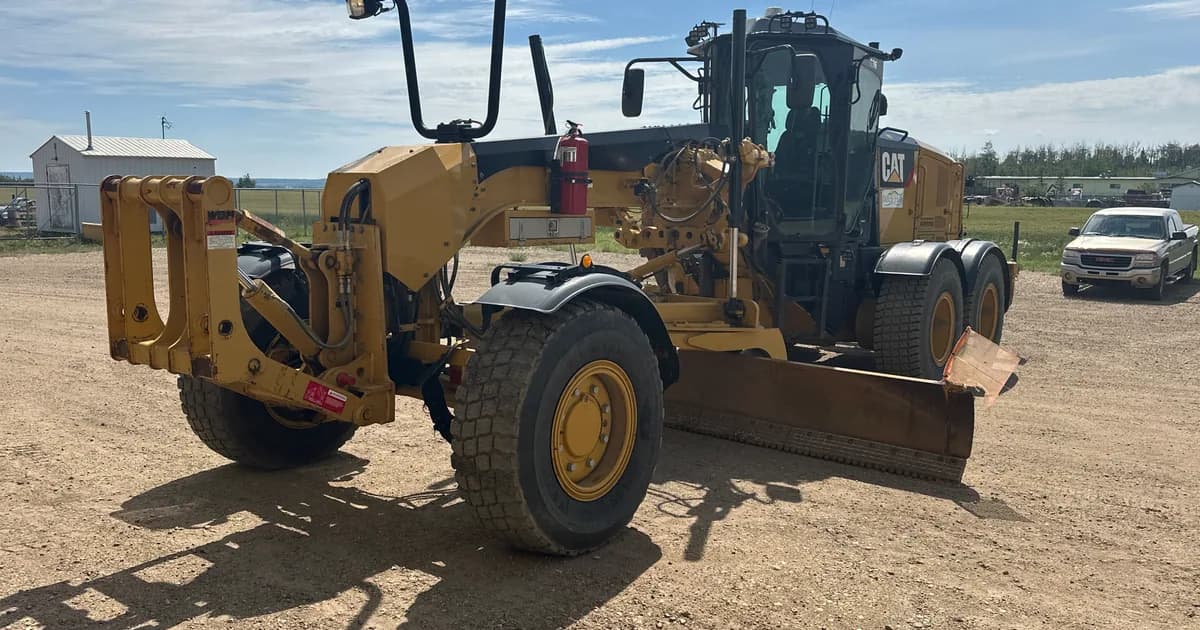
You left a job running equipment for a construction company, registered your own business six months ago, and lined up a grading contract that needs a dozer. Then you called the bank, and they told you they need two years of financials before they will even look at the application.
That is the under-two-year wall, and it stops a lot of new contractors cold. Banks strongly prefer businesses with at least two years of tax history, and without it, many will not engage at all. But here is the part that matters: new businesses finance equipment in Canada every day. The path is just different, the terms reflect the higher risk, and once you understand how lenders think about a newer file, you can get the iron you need to build the business you are trying to build.
Why lenders care about the two-year mark
The two-year threshold is not arbitrary, and it is not a judgment on you specifically. It is a base rate. Statistics Canada and Innovation, Science and Economic Development Canada track exactly how long new businesses last, and the numbers explain the whole thing. Of Canadian businesses with 1 to 99 employees, about 94.8% survive their first year, 86.9% survive to two years, 79.9% to three, and 68.0% are still running at five years (ISED, 2025).
Read that the way a lender does. Roughly one in eight new employer businesses does not make it to the two-year mark. A lender financing a brand-new business is taking the risk that the business is gone in twelve months, leaving them to repossess and resell a machine at a loss. Their models — built on thousands of loans — price that risk in, or avoid it.
So the two-year wall is really the lender waiting out the riskiest window. By two years, a business has shown it can find work, manage cash flow, and make payments. Your job, as a newer business, is not to argue with the statistic — it is to give the lender enough other assurance that your file looks like the 87% that make it, not the 13% that do not.
Key takeaway: The two-year rule is a statistical risk threshold, not a verdict on your ability. Lenders who work with newer businesses exist — they just need more assurance, and you control most of what provides it.
What lenders actually require from newer businesses
When a lender looks at a business under two years old, the evaluation shifts from the business to you. Here is where they focus.
Personal credit score
This is the most important factor for a newer business — it is the lender's primary read on your financial reliability. Rates float off the prime rate, which sits at 4.45% as of June 2026; treat these as directional, not quotes.
| Personal Credit Score | Likelihood of Approval | Typical Terms |
|---|---|---|
| 720+ | Good, with the right down payment | 9–12%, 15–20% down, 4–6 yr term |
| 680–719 | Decent, mostly alternative lenders | 11–14%, 20–25% down, 4–5 yr term |
| 650–679 | Possible, limited options | 13–16%, 25–30% down, 3–5 yr term |
| 600–649 | Difficult, private lenders | 15–19%, 30–35% down, 3–4 yr term |
| Below 600 | Very difficult | Most lenders decline |
Compare these to what an established business with the same score would get and you see the premium: a newer business typically pays 2–4 points more and puts 10–15% more down. Our credit score guide breaks down how the number flows through to your terms.
Industry experience
A lender financing a new business wants to know the person running it knows the work. Eight years operating excavators for a large contractor before going out on your own significantly cuts the lender's fear of business failure. Document it — a one-page summary of your years in the industry, the equipment you have run, the projects you have worked, any certifications, and references. Most lenders do not formally require it, but including it separates you from someone who decided to start a construction business with no background.
Down payment
For a newer business, the down payment is arguably second only to credit score. A bigger one does three things at once: it shrinks the lender's exposure (30% down on a $200,000 machine means they finance $140,000 against $200,000 of resale value), it demonstrates the discipline of having saved it, and it lowers the monthly payment — which eases strain on a young business's cash flow.
Contracts and work pipeline
Signed contracts, purchase orders, or confirmed commitments change your risk profile entirely. A new business with a signed $500,000 grading contract from a reputable GC is a different animal than one with no confirmed work. Even informal proof helps — letters of intent, emails from clients, a list of GCs who have committed to using you.
Government-backed programs built for newer businesses
Most new contractors do not know to ask about these, and two of them exist specifically to help a newer business borrow. They are worth raising before you assume the door is closed.
The Canada Small Business Financing Program (CSBFP). This is the one most relevant to equipment. It is a federal program delivered through the banks and credit unions in which Ottawa shares the lending risk with the financial institution — which is exactly what makes a lender comfortable saying yes to a thinner file. And it is explicitly open to brand-new businesses: a start-up qualifies as long as its estimated gross revenue in the first 52 weeks of operation will not exceed $10 million. Used equipment is eligible, and within the program's term-loan limit up to $500,000 can go toward equipment. If your bank balks at your newer file, ask specifically whether they will do the deal under CSBFP — the guarantee can turn a no into a yes.
Futurpreneur Canada. If you are between 18 and 39, look hard at this one. Futurpreneur offers up to $75,000 in equity-free, collateral-free start-up financing — up to $25,000 from Futurpreneur, matched by up to $50,000 from BDC — paired with up to two years of one-on-one mentorship, for businesses not yet operating or operating full-time for 24 months or less. Be realistic about scale: $75,000 will not buy a large excavator outright, but it can cover a solid down payment on a financed machine or buy a smaller starter unit outright — and the mentorship is genuinely valuable when you are new. (Note the age cap: it is for entrepreneurs under 40 at the time of applying.)
BDC — the federal Crown lender, and Futurpreneur's matching partner — also offers start-up financing directly, and its standard equipment loan can finance up to 125% of a machine's price with interest-only payments for up to the first 24 months while you ramp. That postponement of principal is especially useful for a young business whose revenue is still building.
Alternative paths to equipment financing
If the traditional bank path is closed, here is what newer businesses use successfully.
Personal-credit-emphasis lenders. Some equipment finance companies make "credit-only" decisions — they evaluate the deal on your personal credit and the equipment, without demanding extensive business financials. Often the best first stop for a newer business with good personal credit. The trade-off: they usually cap credit-only deals around $150,000–$250,000; above that they want documentation.
The larger-down-payment approach. At 30–40% down, many more doors open, because the lender's downside is limited. Some private lenders fund 40%+ down deals on little more than a credit check and ID.
| Down Payment | Approval Difficulty | Rate Impact | Lender Pool |
|---|---|---|---|
| 10% | Very difficult | Highest rates | Very limited |
| 15–20% | Difficult | High rates | Limited |
| 25–30% | Moderate | Moderate rates | Several options |
| 35–40% | Manageable | Better rates | Most alternative lenders |
| 40%+ | Good odds | Most competitive available | Wide range |
Our down payment guide goes deeper on strategizing around your available cash.
Co-signer or guarantor. A co-signer with established credit, income, and assets can supplement your application — common in family situations. They take on full liability, so it is not a light ask. Some lenders also accept a guarantor who adds security without being on the loan.
Lease-to-own. Leasing can be easier to qualify for than a loan, because the lessor owns the equipment through the term — if you stop paying, they simply take it back. Monthly payments are often lower than a loan, which helps a young business's cash flow; the trade-off is you build no equity during the term and the total cost (payments plus buyout) can run higher. Our lease vs. finance guide covers the comparison.
Dealer and captive programs. Cat (Finning), John Deere (Brandt), Komatsu, and Volvo dealers often have captive finance arms or preferred-lender relationships with more flexibility for newer businesses than a standalone bank — the dealer wants to move the machine, and their finance partner understands that, especially on new equipment.
Equipment-backed private lending. Private equipment lenders lend against the machine and your ability to pay, not your financial statements. A well-known brand in good condition, a reasonable down payment, and decent credit will get a newer business approved at many of them. Rates are higher — typically 13–18% — but they serve a real purpose for a business that needs equipment now and cannot wait two years.
Key takeaway: There is no single path for newer businesses. The right one depends on your personal credit, your available down payment, the machine, and how urgently you need it — and most successful new contractors combine several of these.
Documentation tips for newer businesses
Even without two years of financials, you can build a strong package.
Include whatever tax returns you have. One year of business returns, a partial year, or your personal returns showing employment income before you started — all of it shows income history and stability.
Bank statements are critical. Six months, personal and business if you have separate accounts. The lender wants consistent deposits and evidence you manage money well.
Write a simple business plan. Not a 50-page document — a 1–2 page summary of what the business does, who your customers are, what equipment you have and need and why, and a basic 12-month revenue projection. It signals professionalism and forethought.
List your existing equipment. Even a pickup and a trailer, with rough values. Owned assets demonstrate stability and give the lender a fuller picture.
Have references ready. Two or three professional references — clients, GCs, industry contacts. Not every lender calls them, but having them signals confidence.
Building your business history faster
While you work toward the two-year mark, build the record that makes future financing easier.
Run everything through a business bank account. All revenue and expenses through one account gives any lender a clean financial record after 12–24 months.
Use a business credit card responsibly. Even personally guaranteed, it starts a business-credit track record. Keep utilization under 30% and pay in full.
Finance a smaller machine first. A $30,000–$50,000 equipment loan paid perfectly for 12–18 months establishes you as a reliable equipment borrower. When you come back for the $200,000 machine, you have a track record.
File taxes on time and accurately. Your first year of business returns is a milestone — file on time and report income accurately. Under-reporting income hurts you when you need to prove it for financing.
Protect your personal credit. Late payments, collections, or new debt during your first two years can derail the next application. (Our credit score guide covers how to keep it clean.)
Realistic expectations
Straight talk about financing a business under two years old.
Your rate will be higher — plan for 2–5 points above what an established business with your score would pay. On a $200,000 loan, that is roughly $4,000–$10,000 more a year. Real money, and the cost of building.
Your down payment will be larger — budget 20–35% rather than 10–15%. On a $200,000 machine, that is $40,000–$70,000 in cash.
Your term may be shorter — 4–5 years where an established business might get 6–7. Higher monthly payments, but less total interest and faster equity.
Your own bank may say no, and that is fine. The lender who says yes on reasonable terms is the right lender for this stage.
Refinancing is the later play. Plenty of contractors finance at a higher rate now and refinance after 12–24 months of on-time payments and real business history. Get the machine earning, build the record, improve the terms later. If you want to understand the downside scenario before you sign, our equipment financing default guide covers it honestly.
Key takeaway: Paying a premium on your first equipment deal is not a failure — it is an investment in building the business. The machine earns from day one; the higher financing cost is a temporary condition that improves as the business matures.
The smart play
Starting an equipment-based business is hard, and financing adds complexity — but it is a solvable problem contractors solve every day. The smart play is to be realistic about where you are, know what to bring to the table, and work with people who understand newer-business financing. Do not apply at five banks that will all say no — go to the lenders, programs, and brokers built for this stage.
Sources: Business survival rates — ISED Key Small Business Statistics 2025 and Statistics Canada; CSBFP start-up eligibility and risk-sharing — Innovation, Science and Economic Development Canada; Futurpreneur financing and eligibility — Futurpreneur Canada; BDC start-up and equipment financing — Business Development Bank of Canada; rate environment — Bank of Canada. Rate, down-payment, and term ranges are directional market conditions as of June 2026 that float with prime — not quotes. Program terms change; verify current details with each program before applying.
Sources: 94.8% survive their first year, 86.9% survive to two years, 79.9% to three, and 68.0% are still running at five years — Innovation, Science and Economic Development Canada; Shares the lending risk with the financial institution — Innovation, Science and Economic Development Canada; Explicitly open to brand-new businesses — Innovation, Science and Economic Development Canada; Up to $75,000 in equity-free, collateral-free start-up financing — Futurpreneur Canada; Start-up financing — BDC; Statistics Canada; Bank of Canada. Rate, term, down-payment and approval-timing figures are directional practitioner conventions current as of August 2026 — they move with the prime rate, vary by lender and by machine, and are not quotes or approvals. Equipment prices are asking prices rather than transaction prices. Tax treatment depends on your own contract and circumstances; confirm with your accountant.
Build your business with the right equipment
If you are building a new business and need equipment to make it work, reach out to IronFinance. We work with newer businesses regularly and know which lenders will look at your deal on your personal profile, your experience, and the equipment — and where federal programs like CSBFP fit. We will tell you straight what is realistic and what is not. No runaround, no cost to find out where you stand.
Already own equipment, or eyeing a different machine?
Frequently Asked Questions
Can a brand-new business finance heavy equipment in Canada?
Yes, but with tighter options and terms than an established business gets. Lenders lean on your personal credit score, industry experience, and down payment instead of business tax history. A new business whose owner has ten years of operating experience and a 720 score gets financed; a first-time operator with average credit will struggle. Federal programs like the CSBFP and Futurpreneur are also built specifically to help newer businesses borrow.
How much down payment does a new business need for equipment financing?
Budget 20–35% down as a newer business, versus 10–15% for an established one. Some lenders accept 15% if your personal credit is excellent and your industry experience is strong. The bigger the down payment, the more comfortable the lender, because their exposure shrinks relative to the machine's resale value.
Should I wait until my business is two years old to finance equipment?
Not necessarily. If you have work lined up and the machine generates revenue, waiting just means lost income. Plenty of lenders finance under-two-year businesses — they charge more for it. The real question is whether the higher cost still makes sense against what the equipment will earn. Run the actual numbers before deciding.
What exactly does a lender mean by time in business?
Usually months of demonstrable operating history, evidenced by business bank statements rather than by an incorporation date. This matters because the two can differ by a long way: a company registered three years ago that only began trading last spring will be assessed on the trading history. It also explains why time in business and the revenue floor are so tightly linked — a business six months old cannot produce twelve months of deposits no matter how good those six months were.
Is a personal guarantee normal for a new business, and what does it actually commit me to?
It is close to universal on a newer file and it is not a red flag on its own. A guarantee makes you personally responsible for any shortfall left after the machine is repossessed and sold, which is the deficiency balance rather than the whole loan. The practical implication is that the equipment being taken back does not automatically end the obligation. Read what it covers, and treat the payment as a personal commitment as well as a business one.