
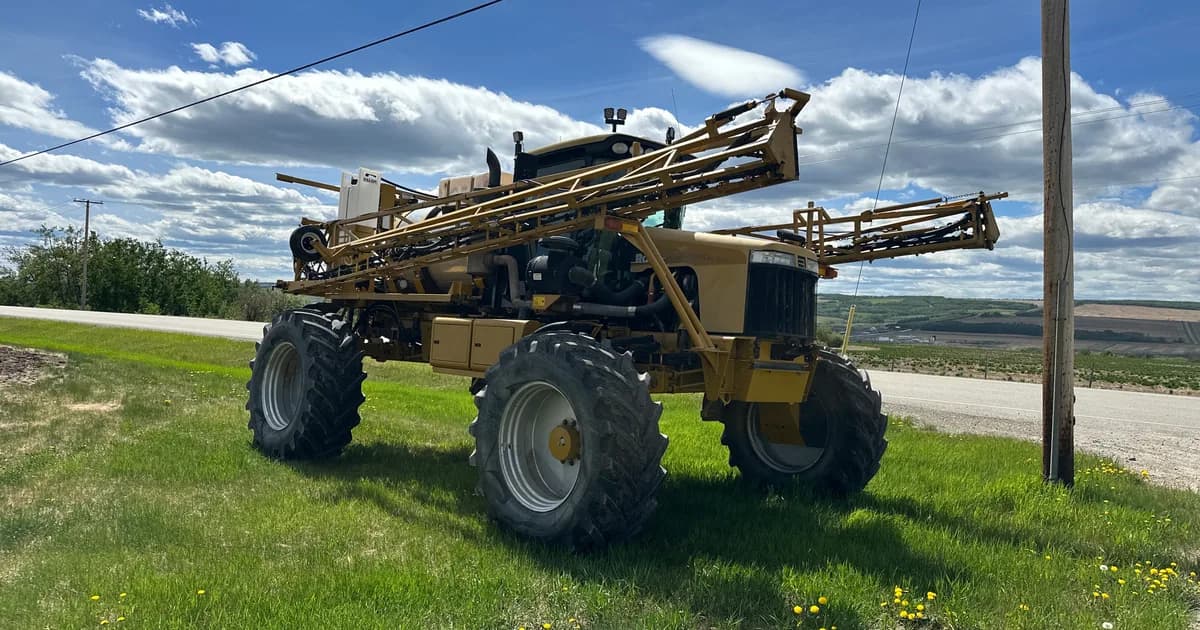
The combine quits in the second week of harvest. There is a machine two provinces over that will do the job, the dealer wants an answer by Friday, and the money in the account is what is left over from a crop that has not been fully delivered yet. That is the position most farm equipment files start from — a real deadline, a real machine, and a bank balance that will look completely different in six weeks.
Farm equipment financing in Canada is genuinely better served than most business lending. There is a Crown lender built for it and a federal guarantee program that caps the interest rate a bank may charge you. The problem is not that the money is missing. It is that the intake forms in front of it were written for businesses that get paid every month.
The Four Places a Canadian Farmer Actually Gets Equipment Money
These are not four flavours of the same product. They price differently, they move at different speeds, and they say no for different reasons.
| Channel | Down payment | Rate | Max term | Where you apply |
|---|---|---|---|---|
| FCC equipment program | 0% under $100,000; 10% under $500,000 | Fixed or variable, set by FCC | Up to 10 years | At a participating dealer |
| CALA loan | 20% of the lesser of price or appraised value (10% if farming under 6 years) | Capped: prime + 1% floating | 10 years for equipment | Your own bank or credit union |
| Dealer captive | Varies by program | Often subsidized on new iron | 5–7 years typical | At the dealer's finance desk |
| Independent finance co. | 10–25% | ~8–18% by credit | 3–6 years | Direct or through a broker |
Start with FCC if the machine is under $100,000 — and you are buying from a dealer. Farm Credit Canada publishes "Zero down payment for loans under $100,000," "10% down payment for loans under $500,000," and a competitive down payment above that, with "Available with up to 10-year terms," security taken on the equipment financed, your choice of "Variable or fixed finance rates," and "No prepayment penalties or FCC fees." New and used both qualify. That is a better published starting position than almost any commercial lender in the country offers a small business.
⚠️ Read the access channel carefully, because it decides whether this program is available to you at all. FCC describes this offer as financing arranged "through a participating dealer" and tells you to "Contact your local dealership to get started." If you are buying privately — from a neighbour, a retirement sale, or an auction — the published zero-down equipment program is not the counter you are standing at. FCC lends across agriculture through other products, but whether it will write a direct equipment loan against a private purchase is not something FCC publishes. Ask them before you assume it, and have the CALA route costed as your alternative.
Ask your own bank about CALA before you accept its ordinary rate. Most farmers do not know the program exists, and a fair number of front-line bank staff will not raise it. It costs a 0.85% registration fee and it caps what the bank may charge you for the life of the loan. Unlike the FCC program, it does not depend on a dealer being in the transaction.
Use a captive when the machine is new and the rate is subsidized. John Deere Financial and CNH Industrial Capital Canada Ltd. — the finance arms behind John Deere and Case IH / New Holland — run promotional programs a general lender cannot match on their own new equipment, because the manufacturer is buying the rate down to move the machine. These offers are time-limited and change through the season, so check the current program rather than a figure quoted in an article.
Go to an independent when the first three have said no, or when speed decides the deal. They are dearer and they know it. What they sell is a 24-to-72-hour answer and a tolerance for files the others bounce.
How a CALA Loan Actually Works — and Where It Stops
The Canadian Agricultural Loans Act program is the least understood of the four, and it is the one most likely to save a farmer real money.
CALA is a guarantee, not a lender. You borrow from a participating bank or credit union. Agriculture and Agri-Food Canada guarantees 95% of the lender's net loss on the loan. That guarantee is why the bank will write terms it otherwise would not, and the program caps what it may charge you in exchange.
The rate cap is the headline. A CALA floating rate may not exceed the lender's prime rate plus 1%. The Bank of Canada held its policy rate at 2.25% on September 2, 2026, and prime sits at 4.45% — so a CALA floating loan is capped at 5.45% today. A fixed CALA rate may not exceed the lender's posted residential mortgage rate for a comparable term, plus 1%.
You can finance 80% of the purchase price — or 90% if you are new. The lender guidelines put an established farmer's CALA loan at no more than "the lesser of 80% of the appraised value of the property for which the loan was made or the purchase price." A beginning farmer — defined in the program as "less than 6 years of farming" — goes to 90% on the same test. That is a materially smaller down payment at a capped rate, and it is the best-value money available to a young operation.
⚠️ Note the words "the lesser of." If the machine appraises below what you agreed to pay, the 80% is calculated on the appraisal, not on your price, and the difference lands on you as cash on top of your down payment. On a private purchase that gap is the single most common reason a farm deal closes late or not at all — the same appraisal-gap mechanic our private-sale guide covers in detail.
Eligibility is far wider than most people assume. Existing farmers, beginning farmers, part-time farmers, start-up agribusinesses, someone taking over the family farm, and co-operatives with majority farmer membership all qualify — as an individual, partnership, corporation or co-operative association. Eligible purposes explicitly include the purchase, installation, alteration, major overhaul or major repair of tools, implements, apparatus and machines.
And here is the ceiling nobody mentions. A farm operation is capped at $500,000 in total CALA borrowing, of which no more than $350,000 may go to equipment and other non-land purposes. Equipment loans run to a maximum of 10 years, and there is a one-time registration fee of 0.85% of principal paid to the Receiver General.
Key takeaway: $350,000 is a real ceiling on real machines. Measured across our own Canadian dealer-inventory mirror on September 7, 2026, the median asking price of a combine in Canada is $522,000 — comfortably above what CALA can fund for equipment, and above FCC's 10%-down tier as well. On a mid-size combine you are into conventional lending whether you like it or not.
What Canadian Farm Equipment Actually Costs
These are asking prices from Canadian dealer listings in our own normalized inventory mirror, filtered to Canada and measured on September 7, 2026. Asking prices are not transaction prices, and the dealer count beside each row is the number that tells you how much to trust it.
| Category | Priced listings | Dealers | Top dealer's share | 25th pct | Median | 75th pct |
|---|---|---|---|---|---|---|
| Tractor | 1,591 | 39 | 27% | $69,000 | $240,000 | $631,950 |
| Combine | 1,563 | 13 | 44% | $288,300 | $522,000 | $725,000 |
| Seeder / drill | 565 | 14 | 42% | $110,000 | $235,500 | $561,750 |
| Sprayer | 298 | 12 | 38% | $157,875 | $313,750 | $629,275 |
| Baler / forage | 467 | 14 | 20% | $27,900 | $48,000 | $98,450 |
| Swather | 84 | 10 | 31% | $86,650 | $128,650 | $172,475 |
Priced listings are Canadian dealer listings carrying an asking price above $5,000; the category totals including unpriced listings are higher. Quartiles are percentile_cont, not hand-picked midpoints.
Read the tractor row as three markets, not one. A 25th-to-75th spread of $69,000 to $631,950 is not a price range, it is proof that "tractor" covers a 45-horsepower utility machine and a 600-horsepower articulated four-wheel-drive in the same word. When you ask a lender about "a tractor" and they ask three questions back, this is why.
Treat the combine and seeder rows with more caution than the rest, and we would rather say so than hide it. They draw on 13 and 14 distinct dealers, and in each the largest single dealer accounts for 44% and 42% of the listings. That is closer to one seller's price ladder than to a market. The baler row — 14 dealers with the largest at about 20% — is the cleanest sample on the table, and the tractor row at 27% across 39 dealers is the most representative.
One category was measured and deliberately left out. Grain-handling equipment — carts, augers, conveyors — came back with 56% of its priced Canadian listings from a single dealer. That is one business's pricing, not a market, and publishing a median off it would be a number with a decimal point and no meaning behind it.
Age moves the number more than anything else. Among Canadian tractor listings with a model year, 2021-and-newer machines carry a median ask of $510,050 across 30 dealers, while 2016–2020 sits at $165,000, 2011–2015 at $160,000, and pre-2011 iron at $58,900.
And lenders read that curve in reverse, through a rule most farmers have never seen written down. Ag lenders cap the term by the machine's age plus the amortization, not by the amortization alone. ATB Financial publishes its ag rules plainly: for equipment listed in the Iron Solutions Official Guide, and for air seeders, a "maximum amortization of 15 years" applies and "The equipment's age plus amortization period cannot exceed 15 years." For equipment not in that guide, both figures drop to 10. Farm trucks of one ton or greater and all leases run on the 10-year version.
Work that arithmetic on a real lot and the effect is severe:
| Machine (bought in 2026) | Age | Max amortization, Iron Solutions listed | Max amortization, not listed |
|---|---|---|---|
| 2024 tractor | 2 yrs | 13 years | 8 years |
| 2021 tractor | 5 yrs | 10 years | 5 years |
| 2016 tractor | 10 yrs | 5 years | 0 — not financeable on this rule |
| 2011 tractor | 15 yrs | 0 — not financeable | 0 |
This is why a cheap old tractor is often the more expensive purchase. A $58,900 pre-2011 machine that no lender will amortize is a cash purchase wearing a price tag. A $165,000 machine from 2016–2020 that supports a five-year term may be the one you can actually carry. Check the model year before you fall in love with the price — those are ATB's published numbers rather than a universal standard, but the mechanic is the market's, because every lender is matching the loan against the asset's remaining working life.
The inventory is where you would expect it. Of 6,373 sellable Canadian ag listings in the mirror, 2,740 are in Alberta and 1,978 in Saskatchewan, with 888 in Ontario and 356 in British Columbia.
What Lenders Look At on a Farm File
The order matters, and it is not the order most people assume.
Revenue is a gate, not a factor. This is the one that surprises people with good credit and good equity. Our own lender network is sizing a payment against deposits, and it wants to see roughly $20,000 a month into the business account — about $240,000 a year. Above that line, everything else on the file gets weighed. Below it, the rest of the file does not get its turn. It is a threshold test, not a score.
Then time in business. A farm in its first two years is a different lending proposition than one with a decade of filings, regardless of the acres. This is precisely where CALA's beginning-farmer provision and its 90% advance earn their keep.
Then credit — and it matters less here than elsewhere. A farm file carries real security. Above roughly 680 all four channels are open. Between 620 and 679 you will usually still get done, with more down or a shorter term. From 550 to 619 you are at independent equipment finance companies in the 13% to 18% range. Below 550 the door is narrower but not shut — it stops being about the score and starts being about revenue and down payment.
Then the machine. Mainstream colours from a dealer with a serial number and a service history finance easily. Orphan brands, heavily modified machines and anything without a clean ownership trail are harder, and a private sale adds an appraisal and a lien search to the timeline.
Structure is negotiated last. Term, down payment, seasonal payment schedules and balloon options are the adjustable parts. They are what a broker moves once the gates above are cleared — not a way to get through them.
Why the Monthly Revenue Question Breaks on a Farm
This is the single most expensive misunderstanding on a Canadian farm equipment application, and it is entirely avoidable.
The tax system already concedes that farm income is not monthly. The CRA's own position is that "generally, you have to report business income using the accrual method of accounting" — and then carves out an exception: "farmers, fishers, and self-employed commission agents can use the cash method or the accrual method to report income, but not a combination of both." Farming is one of a handful of activities the Income Tax Act treats as genuinely lumpy. Lending intake forms did not get the memo.
So the form asks a question your operation cannot answer honestly in the units given. A grain farm is paid at delivery and at contract settlement. Twelve months of bank statements can be two or three very large deposits and nine thin ones. Asked for "average monthly business deposits," a farmer looking at a September statement gives a truthful answer about September that understates the operation by an order of magnitude — and that number, not the tax return, is what the underwriter reads first.
We have watched this happen on a live file. A Saskatchewan producer applied for a modest private-sale purchase and the deposits band came back under $20,000 a month, flagged below the lender minimum before a human had read anything else. The operation was not necessarily below the threshold at all. The question was simply the wrong shape for the business.
The fix takes sixty seconds. Total your last twelve months of deposits, divide by twelve, and use that. Then say in plain words that the income is seasonal and give the annual figure beside the monthly one. An underwriter who sees "$41,000/month average — grain operation, receipts concentrated October to January, $492,000 over the last twelve months" is reading a real business. An underwriter who sees "$6,000" is reading a decline.
This is not farm-specific special pleading — it is how the sector is measured. Statistics Canada reported total Canadian farm cash receipts of $101.4 billion in 2025, with crop receipts of $51.3 billion and livestock receipts of $45.3 billion. Those are annual figures because that is the honest unit for the industry.
Mistakes to Avoid on a Farm Equipment Application
Answering the monthly deposits question from last month's statement. Covered above, and it is the one that costs the most files. Divide the year.
Accepting your bank's ordinary commercial rate without asking about CALA. If the loan qualifies, the floating rate is capped at prime plus 1% — 5.45% at today's prime. Not asking can cost several points across a ten-year term on a six-figure machine.
Assuming CALA covers the whole purchase. The equipment ceiling is $350,000 and the aggregate is $500,000. On a median-priced combine you will be arranging conventional money for the balance, and it is better to know that in week one than in week four.
Applying at four lenders in four weeks. Each application is a separate credit inquiry. Work through one broker who submits to several funders on a single pull.
Buying privately without checking the lien and the seller's legal form. A registered security interest follows the machine, not the seller. And if the seller is a corporation, the bill of sale must be issued by the corporation — a bill of sale in an individual's name on a corporately-owned machine is a title mismatch that stops the file at funding. Our private-sale financing guide walks the appraisal gap and the lien search in detail.
Treating construction-equipment advice as farm advice. The depreciation classes alone are different — Class 10 for self-propelled farm machinery, Class 8 for drawn implements, Class 38 for earthmoving equipment. Guides written for contractors get this wrong for farmers routinely.
How to Strengthen a Farm Equipment Application
Tip 1: Lead with the annual figure and the seasonality. Do not wait to be asked. State the twelve-month deposit total, the monthly average derived from it, and the months the money actually arrives. This single paragraph resolves the objection that kills most farm files before it is ever raised.
Tip 2: Check whether you are a beginning farmer. Under six years of farming raises the CALA advance from 80% to 90% of the lesser of purchase price or appraised value. On a $300,000 seeder that appraises at its price, that is $30,000 less cash at signing, at a capped rate.
Tip 3: Bring the tax returns, not just the bank statements. A farm's T2042 or corporate return tells a story the chequing account cannot. Where the accrual picture is stronger than the cash picture, the returns are the evidence.
Tip 4: Ask for a seasonal payment schedule up front. Annual or semi-annual payments timed to delivery are ordinary in ag lending and unusual elsewhere. Lenders who serve farmers will structure it; lenders who do not will decline the request as odd. The answer tells you which kind you are talking to.
Tip 5: Get the model year before you get a quote. Age drives term, term drives payment, and payment is the number you actually care about. You can model the effect yourself with our equipment payment calculator before anyone pulls your credit.
Tip 6: If credit is the weak part, say so early. A bruised score changes which lender the file goes to, not whether it can be done. Discovering it at the underwriting stage costs a week; disclosing it at the start costs nothing. Our bad-credit financing guide covers what actually moves on a challenged file.
Sources
Every program figure on this page was read from the primary publisher, not from a secondary summary, and is quoted below so you can check it yourself. Program terms change; the date beside each is when we verified it.
Every source here is Canadian — federal departments and Crown corporations, the Bank of Canada, Statistics Canada, and Canadian lenders' own published terms. That is deliberate. American equipment-financing figures circulate widely and do not apply here: the programs are different, the rate references are different, and the tax classes are different. If a number on this page is wrong, it is wrong in Canadian dollars under Canadian rules, and you can check it against the source in one click.
Farm Credit Canada — equipment financing terms (verified 2026-09-07)
"Zero down payment for loans under $100,000 · 10% down payment for loans under $500,000 · Competitive down payment on loans over $500,000 · Available with up to 10-year terms · Security taken on equipment being financed · Variable or fixed finance rates · No prepayment penalties or FCC fees"
FCC also frames the channel: "When you buy new or used farm equipment and finance through a participating dealer," and directs applicants to "Contact your local dealership to get started." — FCC, Equipment Financing
Agriculture and Agri-Food Canada — CALA loan limits (verified 2026-09-07)
"Loans are limited to a maximum of: $500,000 for the purchase of land and the construction or improvement of buildings; $350,000 for all other loan purposes."
Eligible purposes include the "Purchase, installation, alteration, major overhaul, or major repair of: tools, implements, apparatus, and machines," and a beginning farmer is defined as "less than 6 years of farming." — AAFC, Canadian Agricultural Loans Act Program and Eligibility
AAFC — CALA guarantee, advance limits, rate caps and fee (verified 2026-09-07)
"the Minister of Agriculture and Agri-Food (the Minister) is liable to pay to the lender 95% of a loss sustained on a CALA Program loan"
The advance "must not exceed the lesser of 80% of the appraised value of the property for which the loan was made or the purchase price" for an established farmer, and 90% for a beginning farmer. Rates are capped at the lender's prime plus a maximum 1% floating, or its published residential mortgage rate for a comparable term plus a maximum 1% fixed. "The loan registration fee is 0.85% of the loan principal." Equipment and other non-land loans run to a maximum of 10 years. — AAFC, Guidelines for lenders administering CALA Program loans
Bank of Canada — policy rate and prime (verified 2026-09-07) The policy interest rate was held at 2.25% on September 2, 2026, with the next scheduled decision October 28, 2026; the chartered bank prime rate stands at 4.45%. The 5.45% CALA floating cap quoted on this page is prime + 1% at that date and moves whenever prime moves. — Bank of Canada, Policy interest rate and Daily Digest
Canada Revenue Agency — accounting method (verified 2026-09-07)
"Generally, you have to report business income using the accrual method of accounting." "Farmers, fishers, and self-employed commission agents can use the cash method or the accrual method to report income, but not a combination of both."
— CRA, Accounting for your earnings
Canada Revenue Agency — CCA classes for farm equipment (verified 2026-09-07) Tractors, self-propelled combines, self-propelled forage harvesters and self-propelled balers are Class 10 at 30%; drawn combines and drawn forage harvesters are Class 8 at 20%. Earthmoving equipment sits in Class 38, which is why construction-equipment tax guidance does not transfer to a farm purchase. — CRA, Farming Income and the AgriStability and AgriInvest Programs Harmonized Guide — CCA rates
ATB Financial — published agricultural age-plus-amortization rule (verified 2026-09-07)
"maximum amortization of 15 years … The equipment's age plus amortization period cannot exceed 15 years"
That 15-year test applies to air seeders and equipment listed in the Iron Solutions Official Guide; equipment outside that guide runs on a 10-year version of the same test, as do farm trucks of one ton or greater and all leases. These are one lender's published terms, cited here because they are published — not a universal standard. — ATB Financial, Ag equipment financing and leasing
Statistics Canada — 2025 farm cash receipts (verified 2026-09-07) Total Canadian farm cash receipts were $101.4 billion in 2025, comprising crop receipts of $51.3 billion, livestock receipts of $45.3 billion and direct payments of $4.8 billion. — Statistics Canada, Farm cash receipts, January to December 2025
Manufacturer captive finance entities (verified 2026-09-07) John Deere Financial publishes its Canadian agricultural financing on its Canadian site. Case IH and New Holland equipment is financed in this country through CNH Industrial Capital Canada Ltd., the Canadian entity named on their approval terms. Promotional rates through these programs are time-limited and change through the season, so check the current offer at the dealer rather than any figure quoted in an article — including this one.
We link only Canadian sources on this page, so the manufacturers' global corporate sites are named but not linked; their US programs and US entities do not apply to a Canadian purchase, and conflating the two is the most common error in equipment-financing articles written for a Canadian audience.
IronFinance first-party inventory data (measured 2026-09-07)
Asking-price quartiles, listing counts, dealer counts, top-dealer concentration, model-year bands and provincial distribution come from IronFinance's own normalized dealer-inventory mirror, restricted to Canadian listings (country = 'CA'), sellable and non-noise, with an asking price above $5,000. Quartiles are computed with percentile_cont, not hand-picked midpoints. Asking prices are not transaction prices. Grain-handling equipment was measured and deliberately excluded from the price table because 56% of its priced Canadian listings came from a single dealer.
What is convention rather than citation
Down-payment bands, credit-tier rate ranges, approval timelines and the $20,000-a-month revenue threshold for our own lender network are directional practitioner conventions as of September 2026. They move with prime, vary by lender, and are not quotes or approvals. Where this page describes what "lenders" generally do, that is our experience placing files — not a published rule, and we have tried to make the difference obvious throughout.
Tax treatment depends on your specific equipment, entity and circumstances; confirm with your accountant before planning around any class or rate. Program terms are current as of the verification dates above and are set by the issuing bodies, who may change them. This is general information, not financial, tax or legal advice.
Getting a Straight Read on Your File
FCC, a CALA loan at your own bank, a captive program, or an independent — which one your purchase actually fits is a five-minute question once someone has the machine, the model year, the price and an honest annual revenue figure in front of them. It is a great deal faster to ask than to find out by applying four times.
Send us the details — machine, year, price, your province, and your last twelve months of deposits divided by twelve — and we will tell you straight which channel fits, what the realistic structure looks like, and whether CALA's ceiling is going to matter on your purchase. No credit pull, before you commit to anything.
Ready to move? Start an application. Buying from a neighbour rather than a dealer? Read the private-sale guide first — the appraisal gap and the lien search are where those deals stall. Farming as a sole proprietor rather than through a corporation? Equipment financing for sole proprietors covers the reported-income paradox that decides those files, and the used equipment financing guide covers the age and hours limits that apply to older iron.
Already own equipment, or eyeing a different machine?
Frequently Asked Questions
How do you finance farm equipment in Canada?
There are four realistic channels and they are not interchangeable. Farm Credit Canada publishes zero down payment on equipment loans under $100,000, 10% down under $500,000 and terms up to 10 years — but that program is arranged through a participating dealer, so it is not the counter you are at on a private purchase. A CALA-guaranteed loan comes from your own bank or credit union and carries a 95% federal guarantee, which caps the floating rate at the lender's prime plus 1% and lets an established farmer borrow up to 80% of the lesser of purchase price or appraised value, or 90% if you have farmed under six years. Dealer captive programs — John Deere Financial, or CNH Industrial Capital Canada behind Case IH and New Holland — compete on subsidized rates for their own new equipment. Independent equipment finance companies are dearer but move in 24 to 72 hours and take files the first three decline. Which one fits turns less on the machine than on how your income is reported and whether a dealer is in the transaction.
What credit score do you need for farm equipment financing in Canada?
There is no published floor, and on a farm file the score matters less than it does on most business files because the land and the equipment carry real security. Broadly: above about 680 the FCC, CALA and captive routes are all open; 620 to 679 usually still works but expect more down payment or a shorter term; 550 to 619 moves you to independent equipment finance companies at roughly 13% to 18%. Below 550 you are into specialist lenders, larger down payments and shorter terms — and the honest answer is that a 500 score alone does not disqualify a farm purchase, but it stops being the deciding factor and revenue becomes one. Our own lender network wants to see roughly $20,000 a month into the business account, which on a farm means about $240,000 a year, however lumpy the deposits are.
Can you finance used farm equipment in Canada?
Yes, through every channel. FCC finances new or used farm equipment on the same published terms, though its zero-down equipment program is arranged through a participating dealer rather than on a private purchase. CALA's eligible purposes explicitly cover the purchase, installation, alteration, major overhaul or major repair of tools, implements, apparatus and machines, with no new-only restriction. Independent lenders finance used iron routinely. What actually limits you is age, and ag lenders apply it as a combined test rather than a simple cut-off: ATB Financial, for instance, publishes that the equipment's age plus the amortization period cannot exceed 15 years for machines listed in the Iron Solutions Official Guide, or 10 years for machines that are not. Bought in 2026, that gives a 2021 tractor up to a 10-year amortization on the 15-year rule but only 5 years on the 10-year one, and leaves a 2011 machine with no amortization at all. Those are one lender's published numbers rather than a universal standard, but the mechanic is market-wide: the loan has to be retired while the machine still has working life and resale value left.
What is the CALA program and what does it cover?
The Canadian Agricultural Loans Act program is a federal loan guarantee, not a lender. You borrow from a participating bank or credit union and Agriculture and Agri-Food Canada guarantees 95% of the lender's net loss, which is why the terms are better than the same bank would otherwise write. A farm operation can carry up to $500,000 in total, of which no more than $350,000 may be for equipment and other non-land purposes. The floating rate is capped at the lender's prime plus 1% and the fixed rate at its posted residential mortgage rate for a comparable term plus 1%. Equipment loans run up to 10 years. There is a one-time registration fee of 0.85% of the loan principal, paid to the Receiver General. Eligibility is wide: existing farmers, beginning farmers, part-time farmers, start-up agribusinesses, someone taking over the family farm, and co-operatives with majority farmer membership.
Why does the monthly revenue question on a financing application break on a farm?
Because it asks for something a farm does not have. The CRA itself treats farming differently — most businesses must report income on the accrual method, while farmers, fishers and self-employed commission agents may use the cash method instead. A grain operation is paid at delivery and at contract settlement, so twelve months of deposits can be two or three large ones and nine near-empty ones. When an intake form asks for average monthly business deposits, a farmer looking at last month's statement honestly answers with a number that understates the operation by a wide margin, and the file gets held or declined on a figure that was never true. The fix takes one minute: total the last twelve months of deposits and divide by twelve. Say plainly that the income is seasonal and give the annual figure alongside it.
How is farm equipment depreciated for tax in Canada?
Most self-propelled farm machinery falls in Capital Cost Allowance Class 10 at 30% declining balance — tractors, self-propelled combines, self-propelled forage harvesters and self-propelled balers. Drawn implements are different: a drawn combine or a drawn forage harvester sits in Class 8 at 20%. That split catches people, because the same job done by a towed machine depreciates a third slower than by a self-propelled one, which changes the after-tax cost of the two options. Note this is not the class used for construction equipment — earthmoving machines sit in Class 38 — so advice written for contractors does not transfer. Confirm your own equipment's class with your accountant before you plan around it.